
Media library
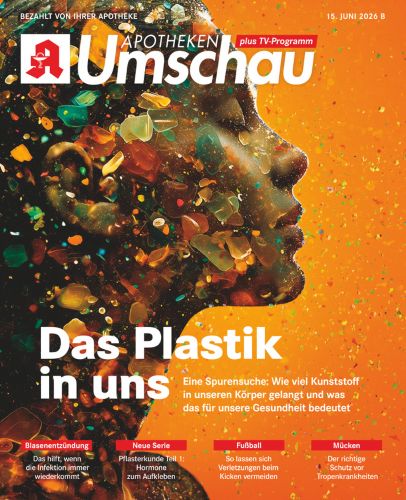
Cover story in *Apotheken Umschau*: “The plastic inside us”
In her article by Kathrin Zinkant – to which Dr Anja Ramsperger also contributed – she explores the “mystery of microplastics”, what is currently known and the challenges facing research. One thing is certain above all: microplastics are ubiquitous, their potential effects are being intensively researched, and consumers can only reduce their exposure in everyday life to a limited extent, albeit in part, by making conscious choices.
Link to the German article (with free registration)

Interview with Prof. Laforsch on Deutschlandfunk “Kultur”
Life without plastic bags – what has it achieved so far?
On 2 June 2016, the first German supermarket chain phased out plastic bags. Was this a sensible measure or a marginal contribution to the fight against plastic pollution? Deutschlandfunk ‘Kultur’ explores this question in Studio 9.
Link to the podcast (German, 6:55)
Article in Die Zeit: Criticism of studies on microplastics, especially from the research community itself
In an article in The Guardian (see link below), scientists expressed doubts about the quality of medical microplastics studies. Errors in sample processing and data analysis make reliable microplastics research difficult. According to Prof. Laforsch from the CRC Microplastics, stricter controls and genuine expertise are needed.
Link to the (German) article in Die Zeit: We have microplastics in our brains and blood. But is it really that bad?
Link to PDF of the article
Link to the Artikel in The Guardian: ‘A bombshell’: doubt cast on discovery of microplastics throughout human body
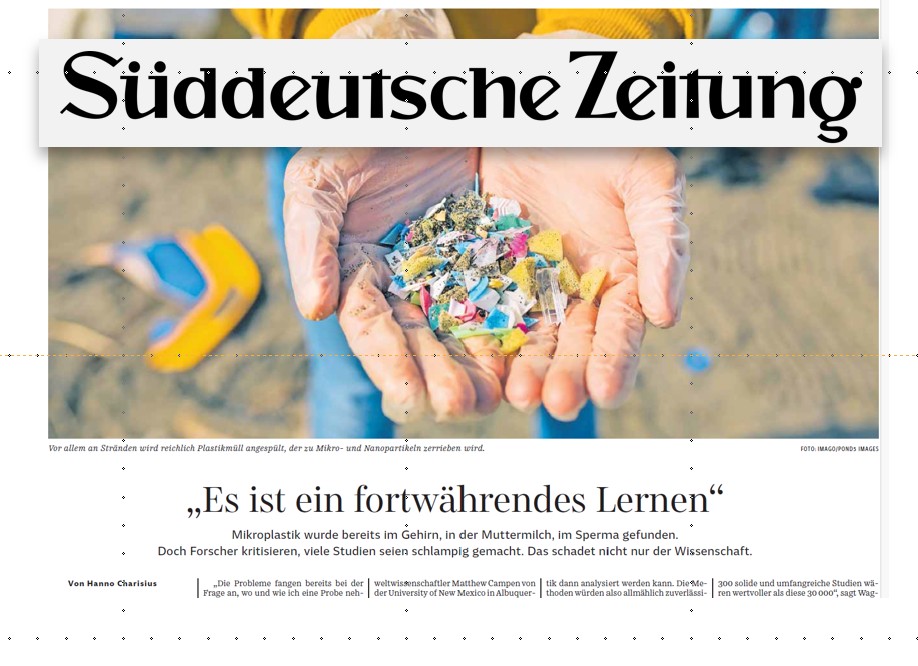
Article in the Süddeutsche Zeitung
In an interview with Prof. Laforsch on the state of science regarding microplastics, the problems and difficulties in the rapidly growing field of microplastics research are explained, along with why this can sometimes lead to spectacular but dubious results.
Link to PDF of the article
Science Slam: H2Ohhh!
At the Science Slam, four researchers take a humorous and vivid look at the element of water. What does microplastic in the Arctic have to do with our laundry, and why do fish sometimes smell like detergent? One of the scientists is Dr Matthias Schott, who has been involved in many CRC projects. Insina Lüschen is the moderator.
This event took place in cooperation with the Science Slam as part of Hamburg Horizons 2025.
Link to the video on YouTube (Start at 00:15:10 – 00:25:00)
Published 8 August 2025
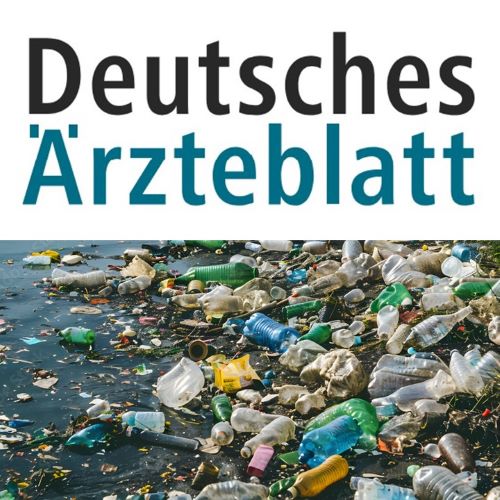
CRC Microplastics in Deutsches Ärzteblatt
Plastic has become an indispensable part of medicine. Among other things, it is a blessing for ensuring a hygienic environment. However, it is a curse for the environment. And it can have the opposite effect of what is the goal of all medical care: it can make people sick. At the very least, there is growing evidence that microplastics and nanoplastics (MNP) that enter the human body are correlated with various diseases. However, the evidence is limited and researchers question the results of current studies.
Link to the article: “Plastic: The littering of the planet”
Link to the article: “Microplastics and nanoplastics in our bodies: Lots of evidence, little knowledge”

Published 9 July 2025
Nanoplastics in the North Atlantic
For their study, researchers collected measurements of nanoplastics and extrapolated that there are up to 27 million tons in the upper ten meters of the water column in the North Atlantic alone. This means that nanoplastics probably account for the largest share of global plastic pollution in the oceans. Researchers see this as an important contribution to understanding the actual extent of plastic pollution, but point out the limitations of the study.
Link zum Artikel in Science Media Center

Published 26 August 2025
The CRC Microplastics at Lake Brombach
Lake Brombach highlights a global problem: microplastics are everywhere – in water, soil, and air. The CRC Microplastics research group is investigating their distribution and consequences for the environment and health. Meanwhile, international negotiations on a plastics agreement are stalling, mainly due to resistance from oil-rich countries. Researchers are calling for urgent production restrictions and greater transparency – but progress remains elusive. A report by Elisa Miebach.
Link to the report (0:00 - 7:30):
Podcast SWR Culture Forum with Prof. Laforsch
Resolution against plastic waste – How can the flood be stopped?
Plastic is everywhere—from Antarctica to the lungs of newborn babies.
In Geneva, the United Nations is discussing a legally binding agreement against plastic pollution. The discussions focus on bans on single-use plastics, stricter recycling quotas, and alternatives. But how big is the problem really? Why is plastic so difficult to avoid? And what does this mean for health, biodiversity, and everyday life?
Janina Schreiber talks to Prof. Dr. Laforsch, among others.
Link to the podcast at:
Plastic Mythbusters Quiz
Plastic Mythbusters aims to stimulate a broader discussion Plastic Mythbusters aims to stimulate a broader discussion about popular myths related to plastics that regularly appear in the media, in public and in political discussions on this topic. The aim is to summarise the scientific evidence, create a broader understanding of the issue and raise awareness of the challenges in tackling this complex problem, particularly where the scientific evidence is not yet available.
The Plastic Mythbusters are part of the Coastal Pollution Toolbox and the Microplastic Compendium. The quiz was developed by Helmholtz-Zentrum Hereon in partnership with the University of Strathclyde, and media experts. The CRC contributed with inputs from Dr. Anja Ramsperger.
Link zum Mythbusters Quiz
Article in Frankfurter Allgemeinen Sonntagszeitung
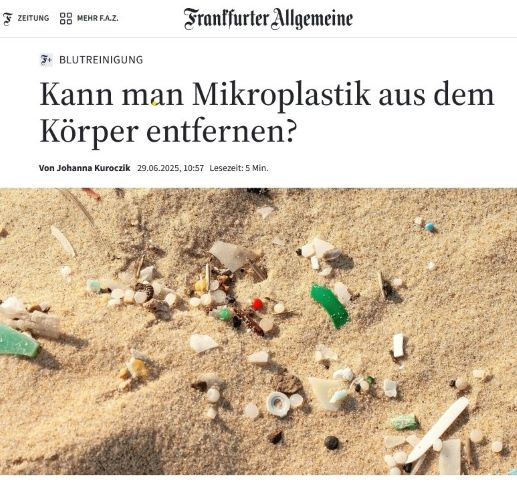
In an interview by Prof. Laforsch with Johanna Kuroczik, Editor of Science, Frankfurter Allgemeine Zeitung & Frankfurter Allgemeine Soontagszeitung, the topic is: Can microplastics be removed from the body?
Link to the article (fee-based content in German)
How much microplastic is in smoked fish cream
In the new CORNET research project Mikroplexfood, the project partners at the University of Bayreuth, like the crc micropastics, are analysing the extent to which food is contaminated with microplastic particles in order to work with manufacturers to find possible solutions to avoid microplastics. Together with the Lehranstalt für Fischerei of the district of Upper Franconia, it has now been analysed whether and how microplastics get into the product through the processing of smoked trout into smoked fish cream. It is now known that the potential input of microplastics increases with the number of processing steps in a food product. This is now to be concretised by measuring the individual processing steps using the example of smoked fish cream.
Here is the link to the (German) article in Bayerische Staatszeitung..
Here is the link to the (German) article in echt Oberfranken

Interview on microplastics on the occasion of the Green Vision Film Festival
From May 22 to 25, 2025, the film festival “Green Visions Potsdam” by festival director Dieter Kosslick took place at the Filmmuseum Potsdam. This year's focus is on plastic in the environment. More about this from Julia Vismann in conversation with Prof. Laforsch.

ZEIT online: The microplastic panic
The tiny particles are in the brain, in the lungs, in the placenta. We eat them, breathe them in. Are they as bad as new studies warn? What we know for sure.
An article by Linda Fischer and Dr Claudia Vallentin with an assessment by Prof Laforsch.
The article is currently only available for a fee.
In addition, an edition of ‘How do you know that?’, the knowledge podcast of ZEIT & ZEIT Online, has been published under the title: ‘How dangerous is microplastic?’ by Dr Claudia Vallentin, Linda Fischer and Christoph Drösser in conversation with Prof Laforsch.
Link to the podcast (German)
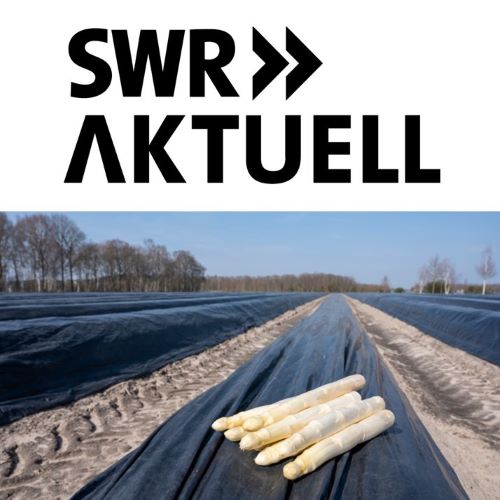
Podcast-Article in SWR Aktuell Global - the environmental magazine
In Margareta Holzreiter's article ‘Asparagus under film: How much damage is microplastic doing to our soil?’, she talks to Prof Laforsch about the fact that the particles are not only getting into our fields through agricultural film, how much is already in there and whether we are already eating it.
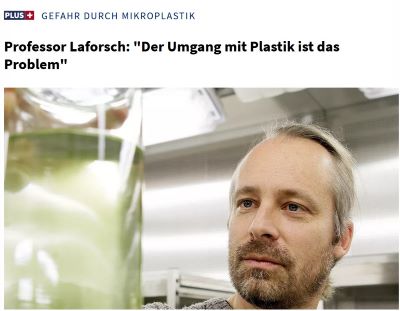
Article in the Bayerische Rundschau
Microplastics can be found in rivers and oceans, on fields and also in us humans. What can we do about the danger? Christian Laforsch says: ‘The biggest problem is our handling of plastics!’
Link to the PLUS article (subject to charge)
© BR
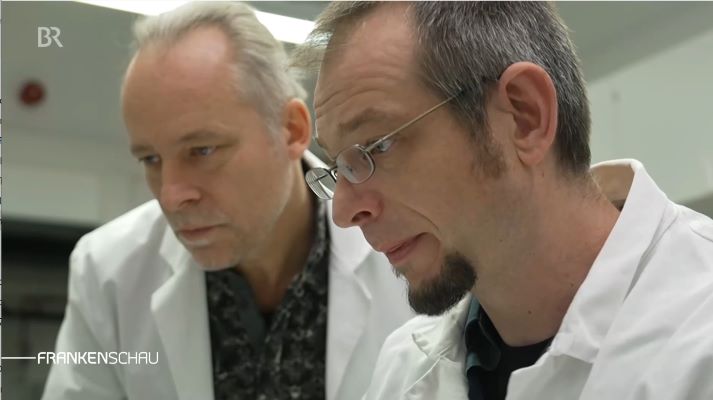
TV report on BR with CRC Microplastics
Microplastics are spreading in soils, waters and the air. While researchers at the University of Bayreuth are investigating the effects on the environment and health, researcher Jule Buschmann is fighting against the flood of plastic and the protection of the oceans in Mozambique.
Link to the report ( available until 03.03.2027)
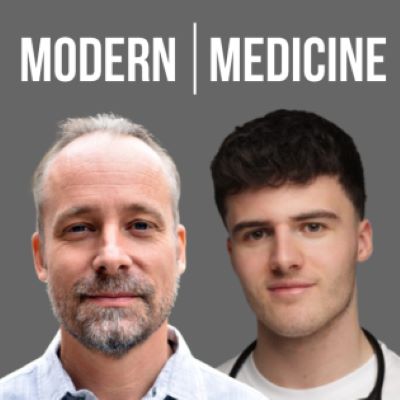
Podcast Modern Medicine with Prof Laforsch
Microplastics in the blood, brain and internal organs: what research really knows | Prof Christian Laforsch
Longevity in focus: Alessandro Falcone (medical doctoral student) talks to top experts every week about scientifically sound strategies for a long, healthy life. From nutrition and fitness to the latest medical advances.
Link to the podcast on youtube

© ZDF
Terra X History - the podcast: The history of environmental destruction
The ‘Great Smog’, ‘Bitterfeld’, ‘Chernobyl’ or ‘Deep Water Horizon’: each of these names stands for one of the major environmental disasters of the 20th and 21st centuries. But did humans really only start destroying the natural foundations of life and the environment in the industrial age? In an interview with Prof Laforsch, among others, on the development of environmental pollution caused by microplastics. (0:51 - 1:02h)
Link to the podcast at spotify (German)

Are microplastics floating in drinking water bottles?
Studies show that tiny plastic particles are probably floating in every drinking water bottle. How many of them and whether they are dangerous for humans is another question, however - and one that requires further research. Article and audio report in BR24 #Faktenfuchs and interview with Prof Laforsch.
Link to the PDF of the article
CRC Microplastics at Week of Environment
The Collaborative Research Centre 1357 Microplastics of the University of Bayreuth exhibits at the Week of the Environment in Berlin on June 4 and 5, 2024. This event organized by the German Federal Environmental Foundation (DBU) takes place under the patronage of Federal President Frank-Walter Steinmeier.
© RiffReporter
Article on the findings of the CRC Microplastics in the online magazine RiffReporter
The article ‘The invisible danger: How microplastics can influence our immune defence’ by Ulrike Gebhardt shows the extent to which people are exposed to microplastics and what dangers microplastics can have on our health. Prof Laforsch from the CRC1357 Microplastics will provide an insight into the current state of research.
© Higher Health Podcast
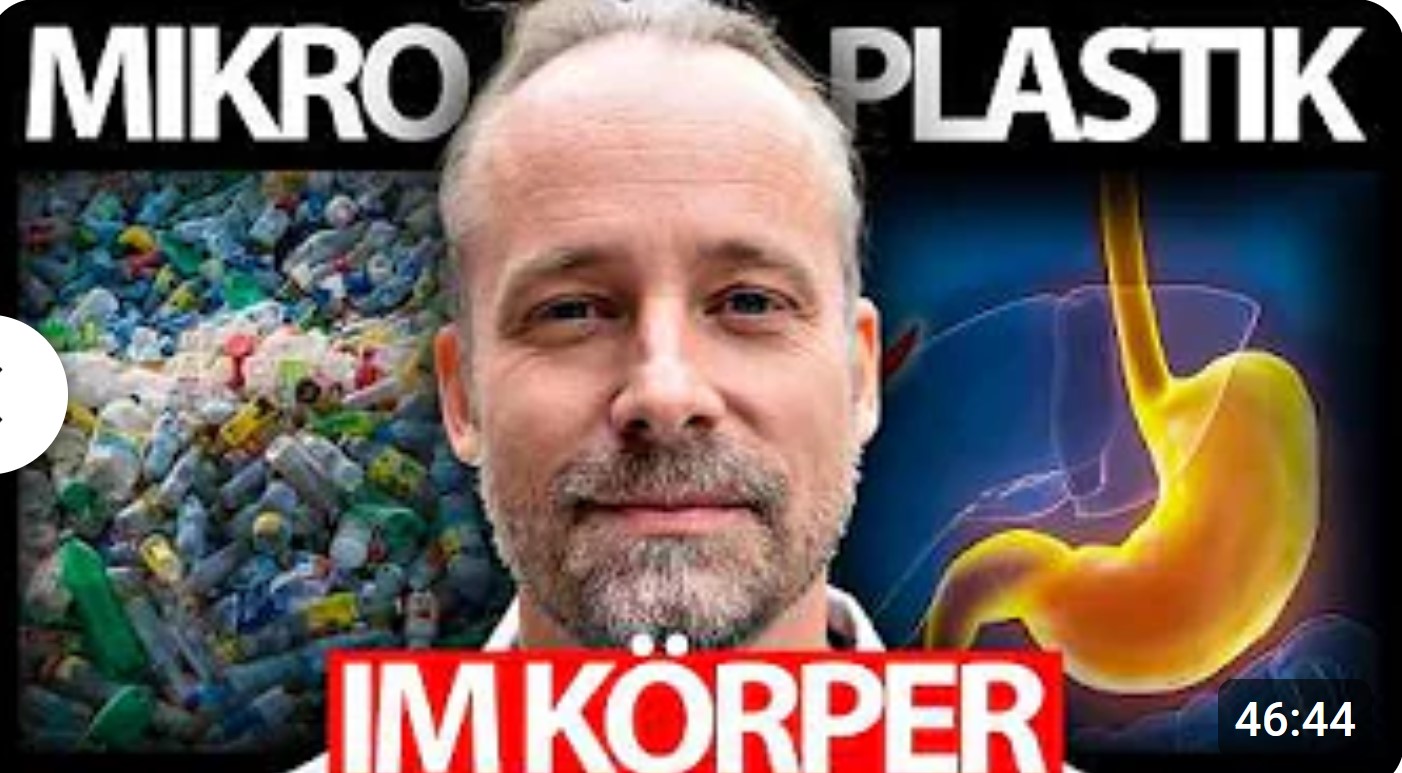
Prof Laforsch as a guest on the Higher Health Podcast
The Higher Health Podcast by Christian Wenzel (Mr. Broccoli/Vegan Athletes/CW Media Alliance GmbH) covers topics ranging from vegan nutrition and mental health to alternative healing methods and the teachings of ancient cultures - "Higher Health" aims to inspire, educate and motivate people to take their health into their own hands. In this episode, Prof. Laforsch is a guest and reports on current research into microplastics.
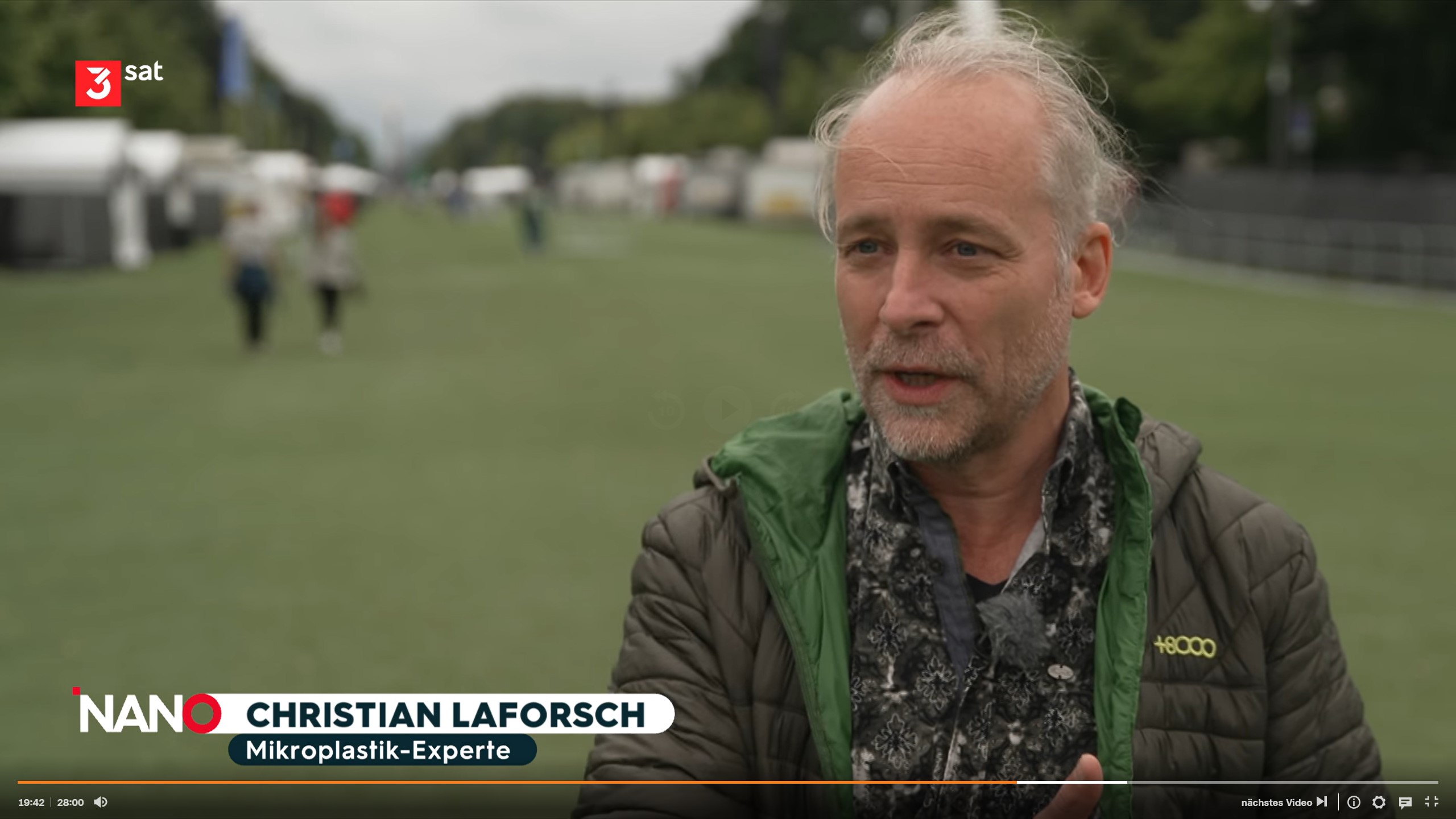
© ZWEITES DEUTSCHES FERNSEHEN
TV-report in ZDF/3sat „NANO“
From minute 19:00 (Video available till 12.07.2029)
The Berlin Fan Mile is 24,000 square metres of artificial turf. Running on the artificial turf leads to microscopic abrasion, or microplastics for short. CRC Microplastcs Speaker Prof Christian Laforsch is investigating the effects this has on our health.
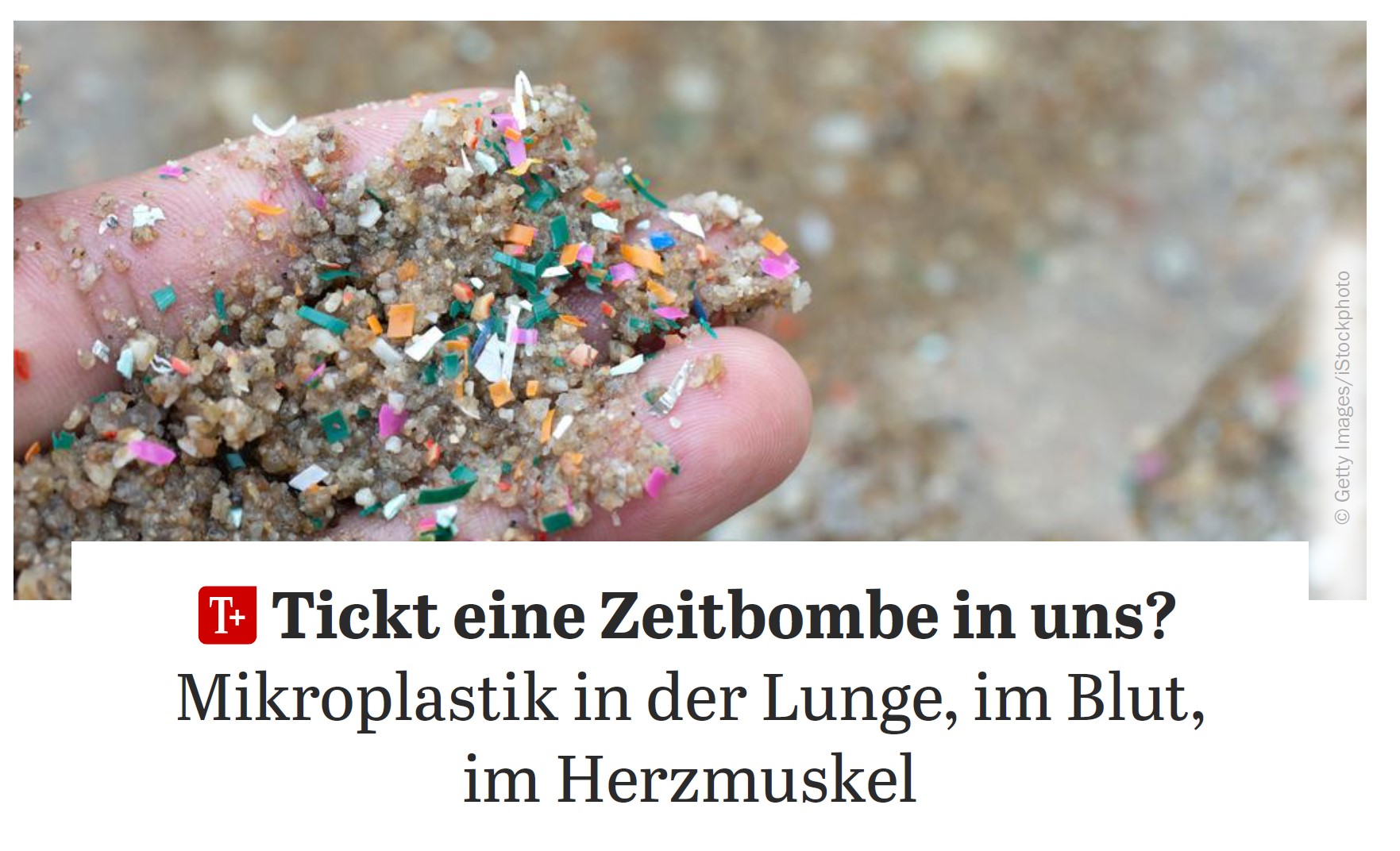
Article in TAZ
Is a time bomb ticking inside us? Microplastics in the lungs, in the blood, in the heart muscle. The tiny particles produced by the decomposition of plastic could also be dangerous for the human body - an article by Christian Weymayr .
Link to the article (german)
Radio report on BR
Bayern 2 "Stadt Land Leute" reports from the fields of politics, business, social affairs, culture and nature. Prof Dr Christian Laforsch is interviewed by presenter Nadine Hauk and introduces the CRC Microplastics and its research work as part of the Week of the Environment.

Interview with Prof Laforsch in Berliner Zeitung
European Championship fan mile in Berlin: Criticism of artificial turf - concerns about microplastics justified? An article and interview with Prof. Laforsch in Berliner Zeitung.
Published 14.03.2024
Prof Laforsch at GASTRO GEPLAUDER podcast
In the podcast ‘GASTRO-GEPLAUDER’, Prof Thomas Rösch talks to Prof Christian Laforsch, spokesperson of the CRC microplastics, in the episode “Microplastics Part 1: ‘Oh God’ or ‘so what’’' about the latest insights on the small plastic particles that appear everywhere.
Link to the Site of the podcast
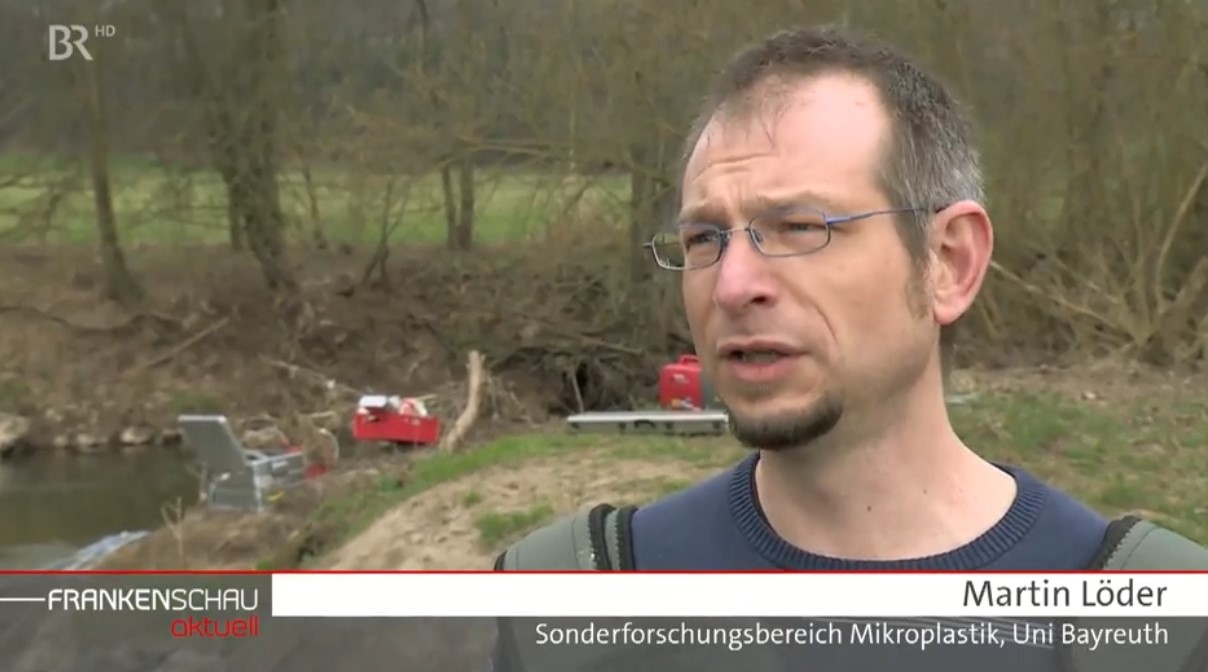
© BR
BR article, radio and TV report about the CRC 1357 Microplastics
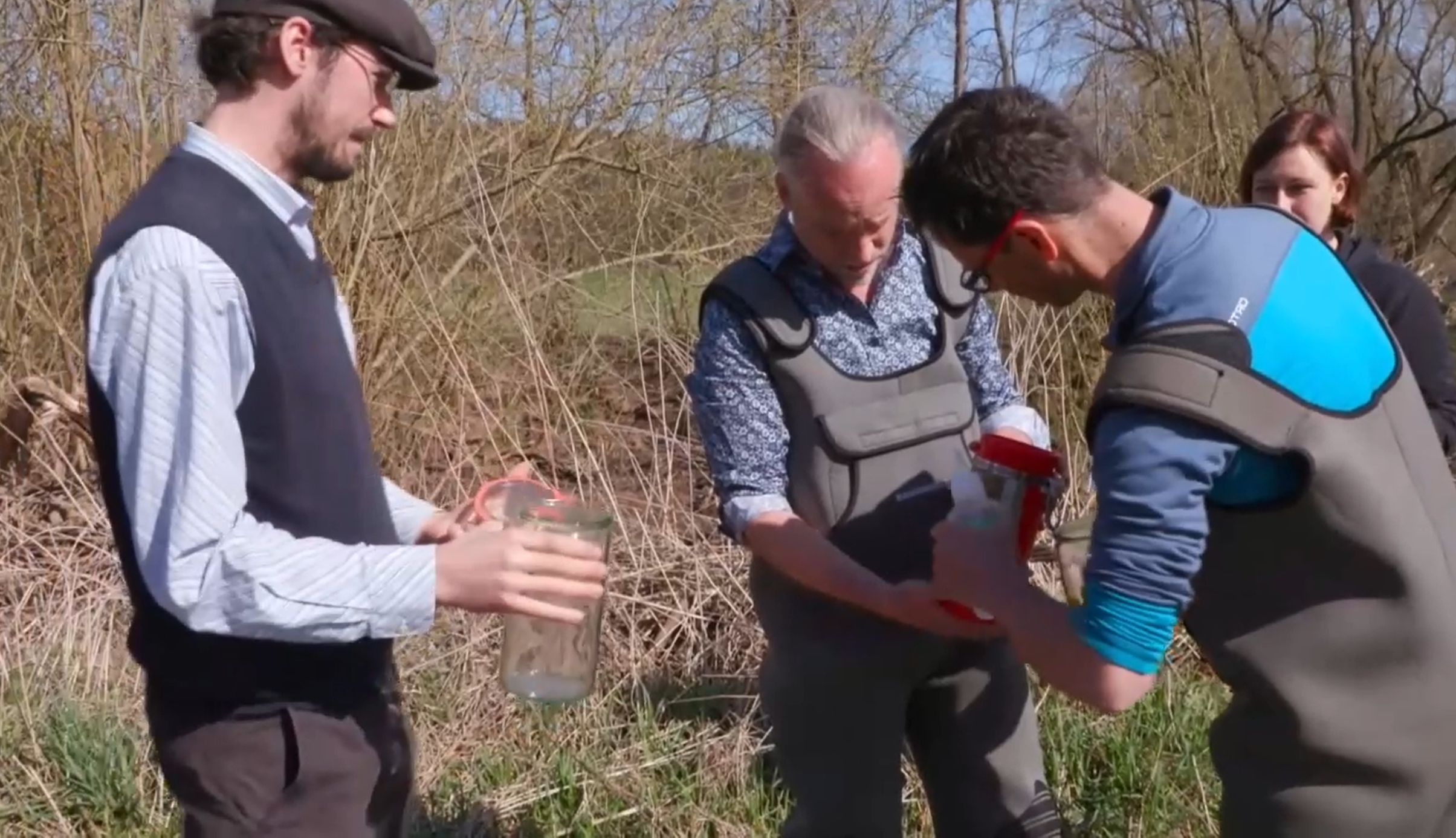
"Worrying": The hunt for microplastics in Roten Main - In March, many volunteers go to the riverbanks in Franconia to collect rubbish. The University of Bayreuth's Collaborative Research Centre for Microplastics takes care of the very small pieces. The students and scientists also make a find in the Red Main.
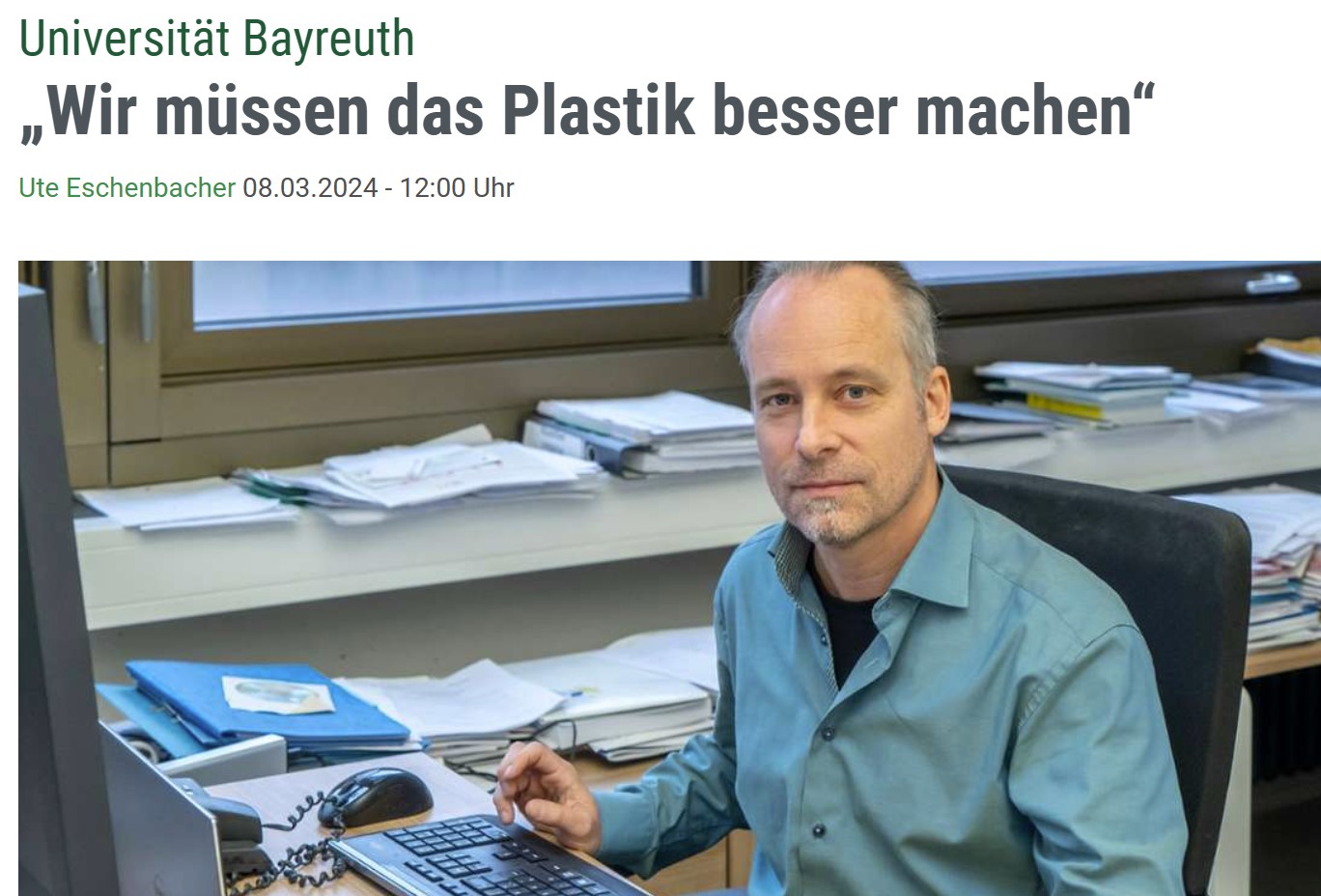
Published 08.03.2024 - © Nordbayrischer Kurier
Article in Nordbayrische Kurier: We have to do better with plastic
In an interview with Ute Eschenbacher, Prof Laforsch reports on current research: why microplastics are not just microplastics, why fishing out microplastics in the waters cannot be a solution, what solutions he sees for the future of plastic use and what we can do about the general microplastic pollution. (Nordbayerischer Kurier, 08.03.2024)

Erschienen am 02.11.2023 - © BR
BR quer: how much does a ban on glitter achieve?
Show dance groups, nail studios and craft enthusiasts will have to do without certain glitter products. Since mid-October, there has been an EU-wide ban on the sale of certain cosmetics and loose glitter. Disposable cardboard straws and plastic lids that stick to the bottle are also intended to alleviate the problem of plastic waste. (BR, 02.11.2023)
Erschienen am 09.05.2022
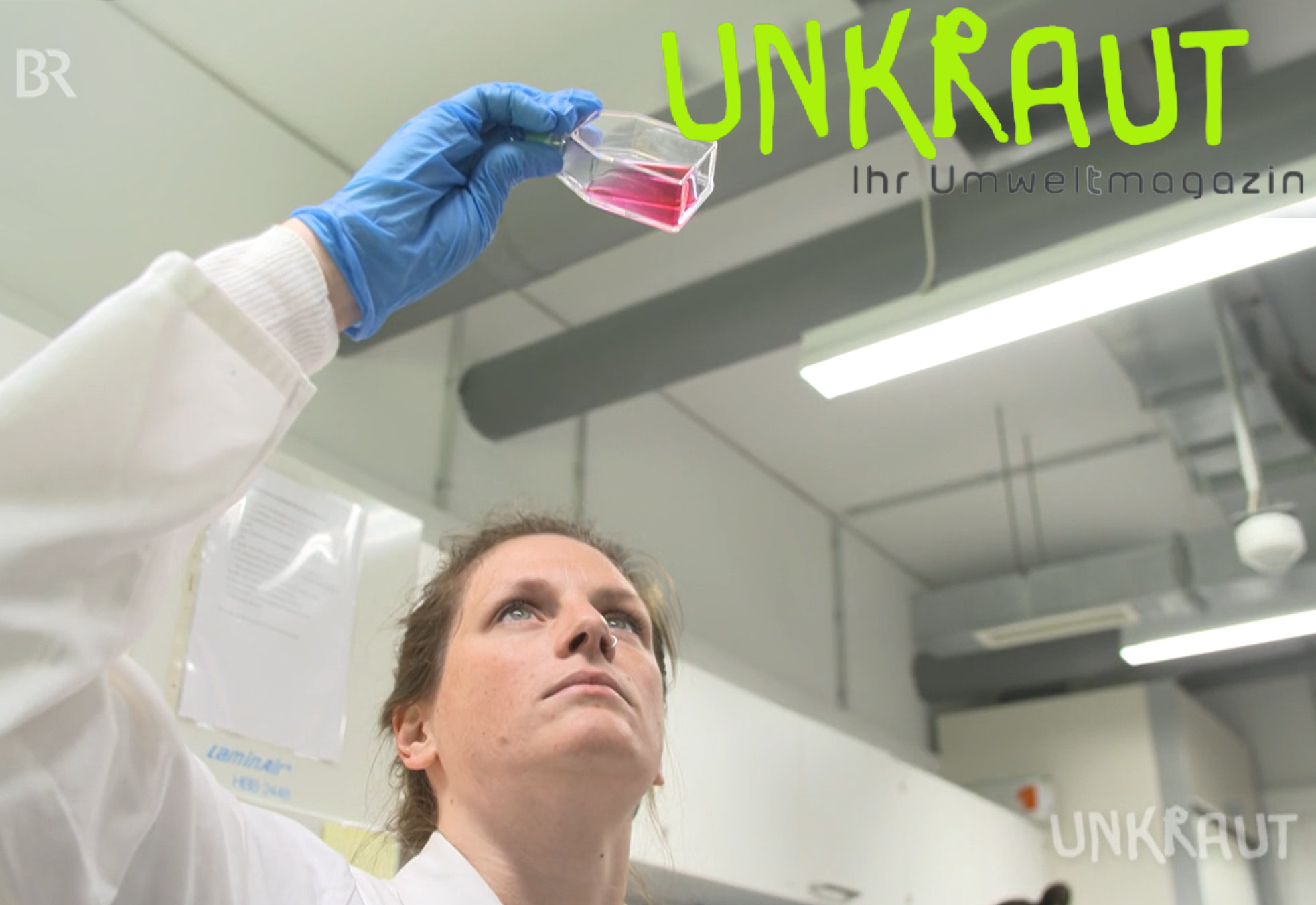
BR: Unkraut das Umweltmagazin - Microplastics in our waters. An invisible danger for humans and the environment.
Several researchers report on their research on microplastics. Prof. Christian Laforsch, spokesperson of the CRC1357 Microplastics, will speak on the topic "What microplastics do to our health". Also present is Ecofario, a company that has developed a technology for filterless filtration of microplastics in sewage algae.
Erschienen am 15.09.2022
Arte RE: Mikroplastik auf der Spur | Die Jäger der unsichtbaren Teilchen
The reportage series "Re:" tells people's stories - authentically and up close. This episode is about microplastic: where does it come from and more importantly, how dangerous is it for us and our environment? Directors Karsten Schwanke and Peter Prestel talked to Prof. Christian Laforsch, Prof. Seema Agarwal and PhD students from the Collaborative Research Centre Microplastics at the University of Bayreuth as well as physicians from the University of Erlangen and the start-up Ecofario.
Click here for the full version of the video (in German).
Erschienen am 10.01.2022
Radio interview with Prof. Dr. Laforsch on the german plastic bag ban that came into force on 1 January 2021
The plastic bag ban is about the lightweight plastic carrier bags. Particularly sturdy reusable bags and the thin plastic bags you find in the fruit and vegetable section in the supermarket are exempt. In his opinion, the plastic bag ban is a first step in the right direction, but one should move towards not using disposable products in general, says the expert. He criticises the alternative paper bag, because it has an even worse ecological footprint than plastic bags.
Released: 16.12.2021
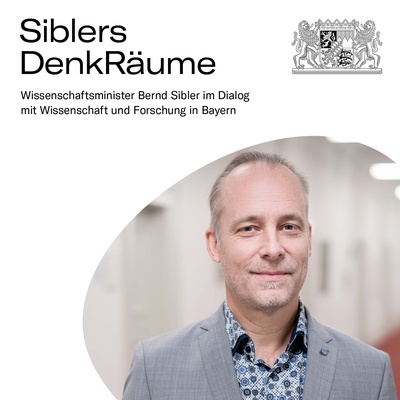
Prof. Dr. Laforsch in dialogue with Science Minister Sibler
Topic: Plastic - hazardous substance or problem solver?
The new podcast episode of "Siblers DenkRäumen" with Prof. Christian Laforsch, speaker of the CRC 1357 Microplastic is online!
How did Prof. Laforsch come to the research topic of microplastics? What are the dangers of microplastics for our health? What would he wish for if he had 3 wishes? What can we do as consumers? The result is an exciting and entertaining podcast! Have fun listening!
Click here for the full version of the podcast (in German).
Erschienen am 04.11.2021 - © ARD Alpha
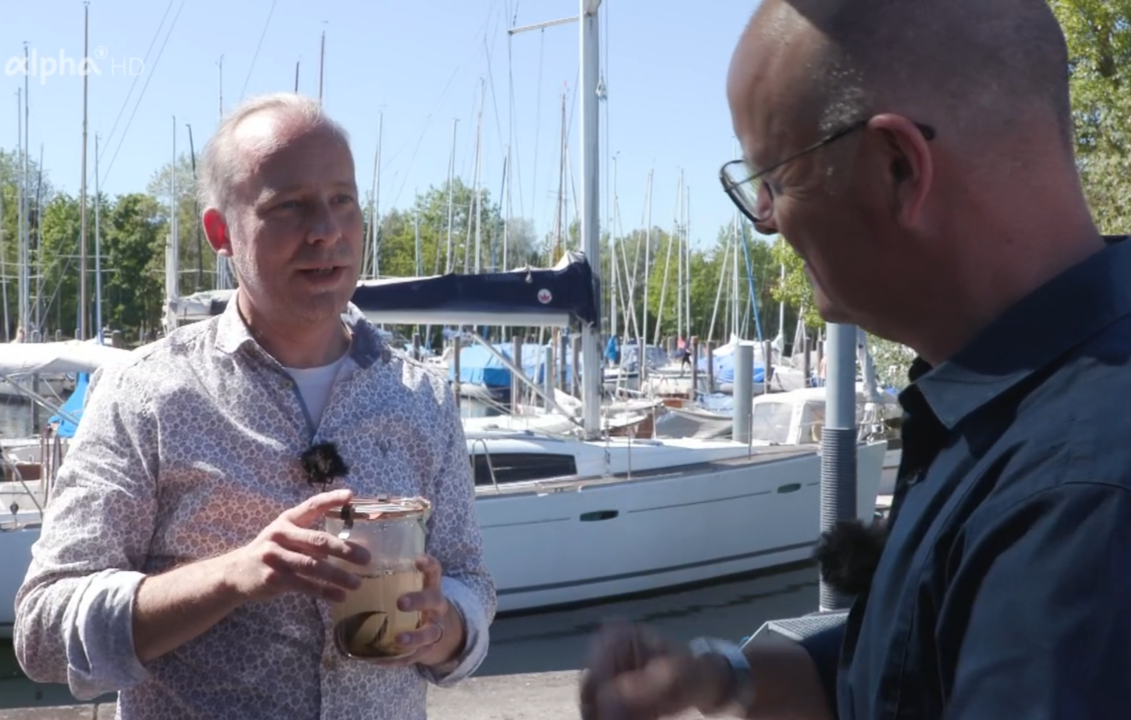
ARD Alpha: Schwanke meets Science
Karsten Schwanke brings cutting-edge research in Germany to life. Plastic - or more precisely microplastics - is becoming an ever greater problem for our nature. The particles are so small that they are barely visible to the naked eye - and they are everywhere: in the air, in the rain, in the water and on the earth. Microplastics are created when we wash our clothes, when we drive our cars, when we cut them with a knife. With Christian Laforsch, he explores the question of how dangerous microplastics are for organisms.
Click here for the full version of the video.
Erschienen am 01.10.2021 - © 3sat NANO
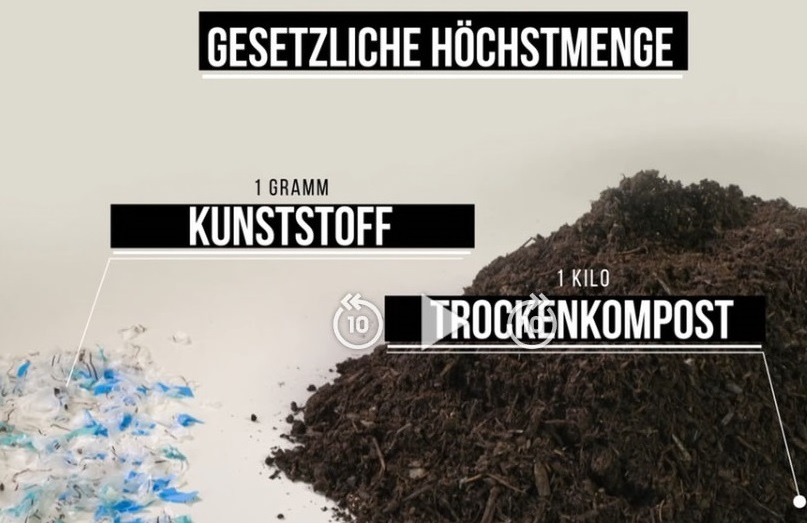
3Sat Nano: Compost and lots of plastic
Click here for the full version of the video (german).
Erschienen am 30.09.2021 - © Aldebaran
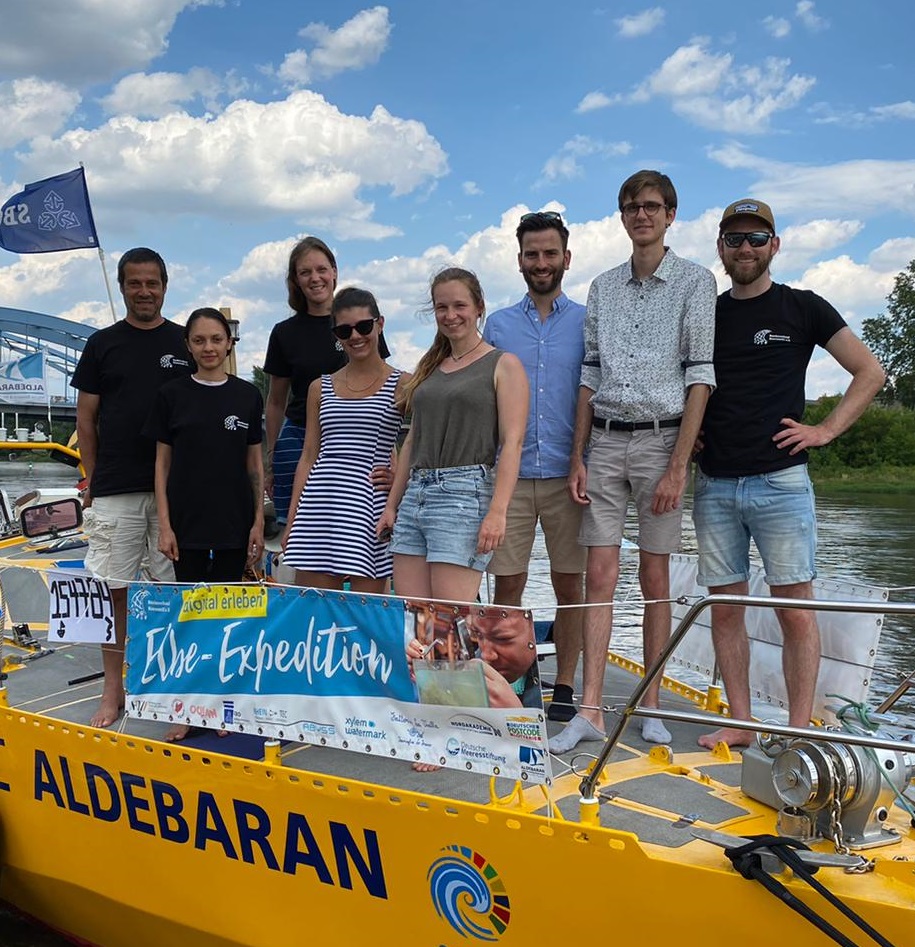
ALDEBARAN Hamburg: Elbe Expedition 2021 Day 10
On day 10, four PhD students from the CRC Microplastics visited the Aldebaran Crew at the Elbe Expedition 2021 to talk about their research. Using exhibits, they show, among other things, the decomposition time of plastic. Matthias Völkl is investigating the effects and behaviour of microplastics at the cellular level. Simon Wieland is researching the cellular interaction of microplastics and is investigating whether microplastic particles can bind to e.g. immune cells. What ultimately leads to their uptake into the cell, and thus into the organism? Nora Meides and Teresa Menzel are working on the formation and degradation of secondary microplastics under simulated environmental influences.
Click here for the full version of the video (german).
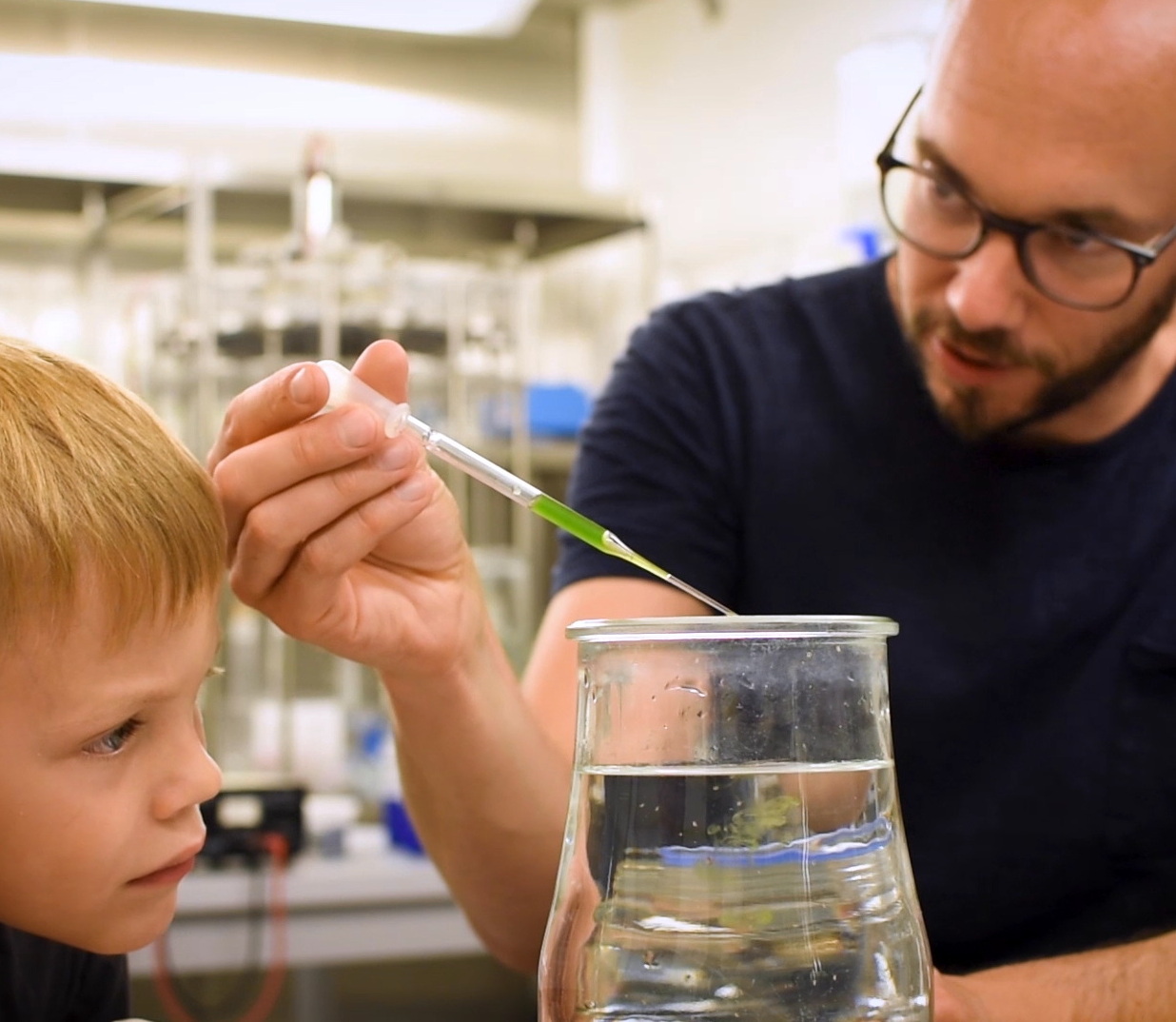
Erschienen am 06.09.2021 - © UBT
WDR: Türen auf 2021 mit der Maus Tag "Mikroplastik Forschung"
Trailer for the "Türen auf mit der Maus Tag 2021". On Sunday 3rd October 2021, the Collaborative Research Centre for Microplastics, together with the team from the Ecological Botanical Garden, has prepared exciting actions for preschoolers and primary schoolers. The video gives some insight into what to expect at the "Türen auf 2021" at the University of Bayreuth. (In German)
Click here for the full version of the video (german).
Erschienen am 02.09.2021 - © hr
hr: alles wissen
The magazine "alles wissen" was about compostable packaging, innovative recycling, hazardous plasticisers and microplastics in aquatic exosystems. From the Collaborative Research Centre 1357 Microplastics you will find contributions from Ruth Freitag, Martin Löder, Julian Brehm and Christian Laforsch. (In German)
Click here for the full version of the video.
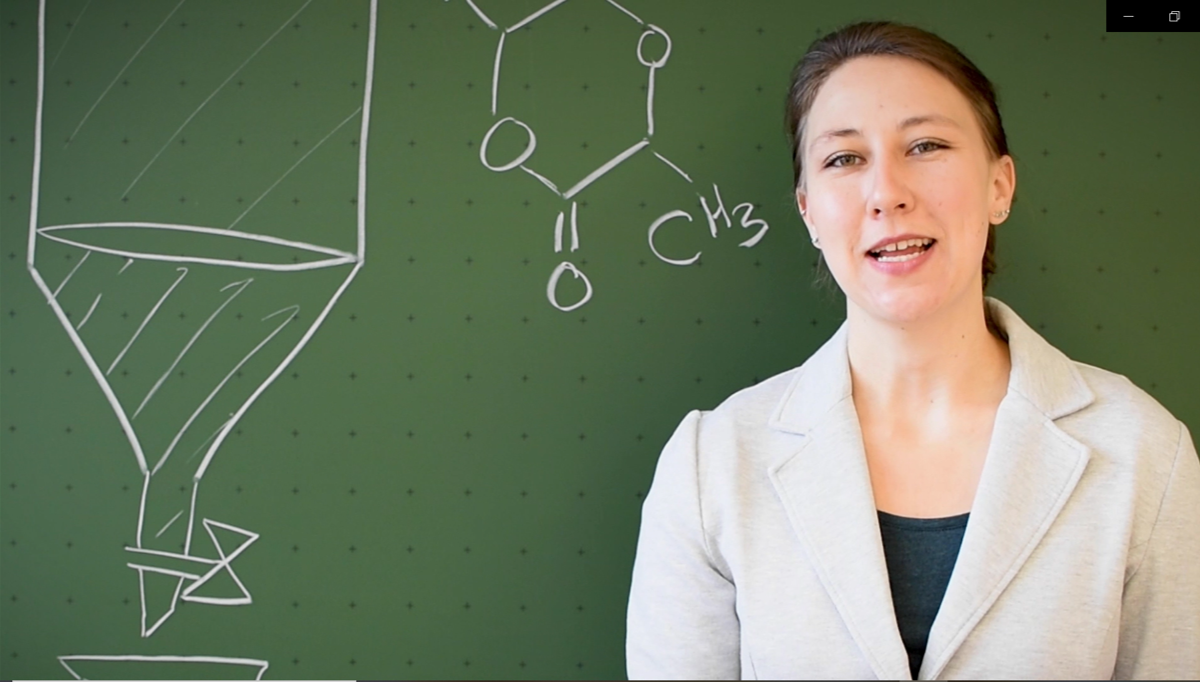
Erschienen am 09.07.2021
MiKoBo: Method development, sample processing and analytics
Julia Möller, PhD student at the Chair of Animal Ecology I, is working in the MiKoBo joint project. She wants to know how microplastics are introduced into arable soils through composts and fermentation residues. In this video she gives an insight into the individual work steps until microplastics can be analytically determined from field samples. Her methods and results are also important and valuable for the work of SFB 1357.
Click here for the full version of the videoon des Videos.
Erschienen am 10.06.2021
11th Science Talk: "Where does it come from? Where is it in? Is it making us sick? And how do we get rid of it?"
As part of the 11th Science Talks of the "Berchtesgadener Land Schülerforschungszentrum", young people and anyone else interested had the opportunity to get in touch with Christian Laforsch via Zoom and ask their questions about microplastics. The conversation and discussion was moderated by Dr. Stefan Lebernegg. A great format to bring students and scientists in touch! (In German)
Click here for the full version of the video.
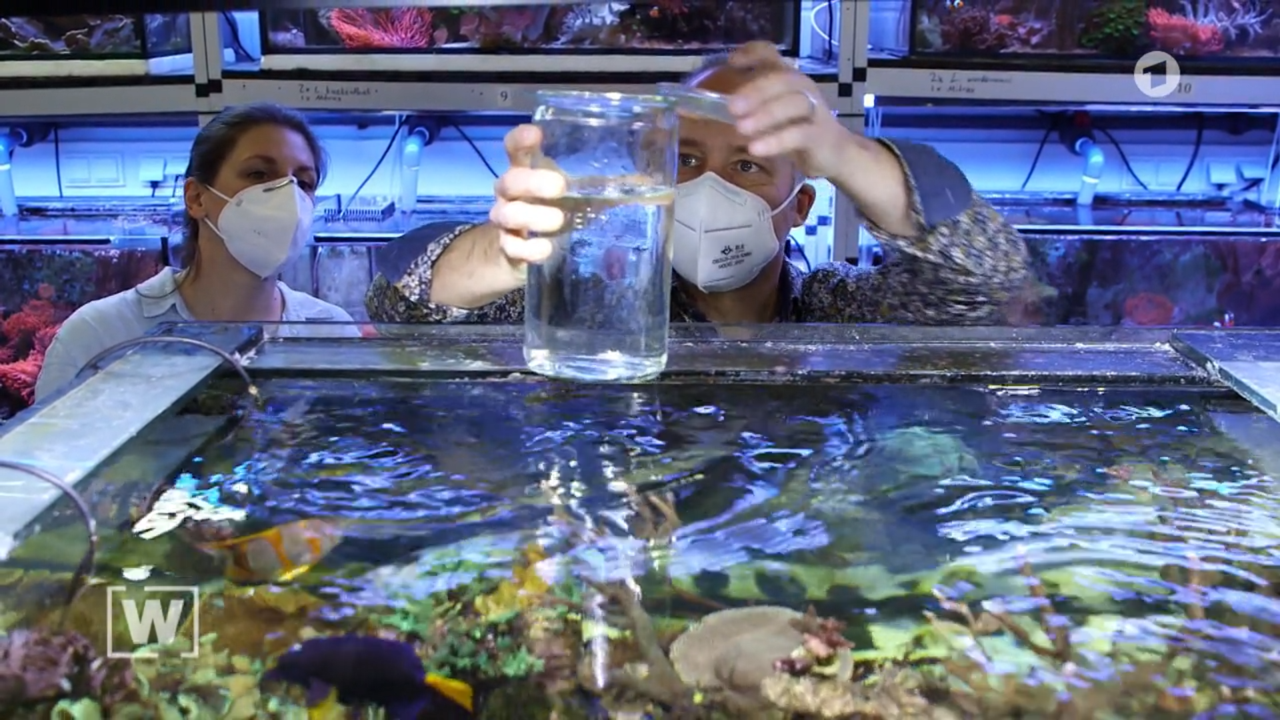
Erschienen am 20.02.2021 - © ARD
ARD: W wie Wissen "How dangerous are microplastics?"
W wie Wissen is reporting about plastic waste in the kitchen, 30 years of the yellow bag, recycling and bioplastics. Sabine Frühbuss and her camera team visited Anja Ramsperger in the laboratory and interviewed Christian Laforsch about the current state of research in the field of microplastics. The video explains the recent Science Advances study and the observed effect of the eco-corona. (In German)
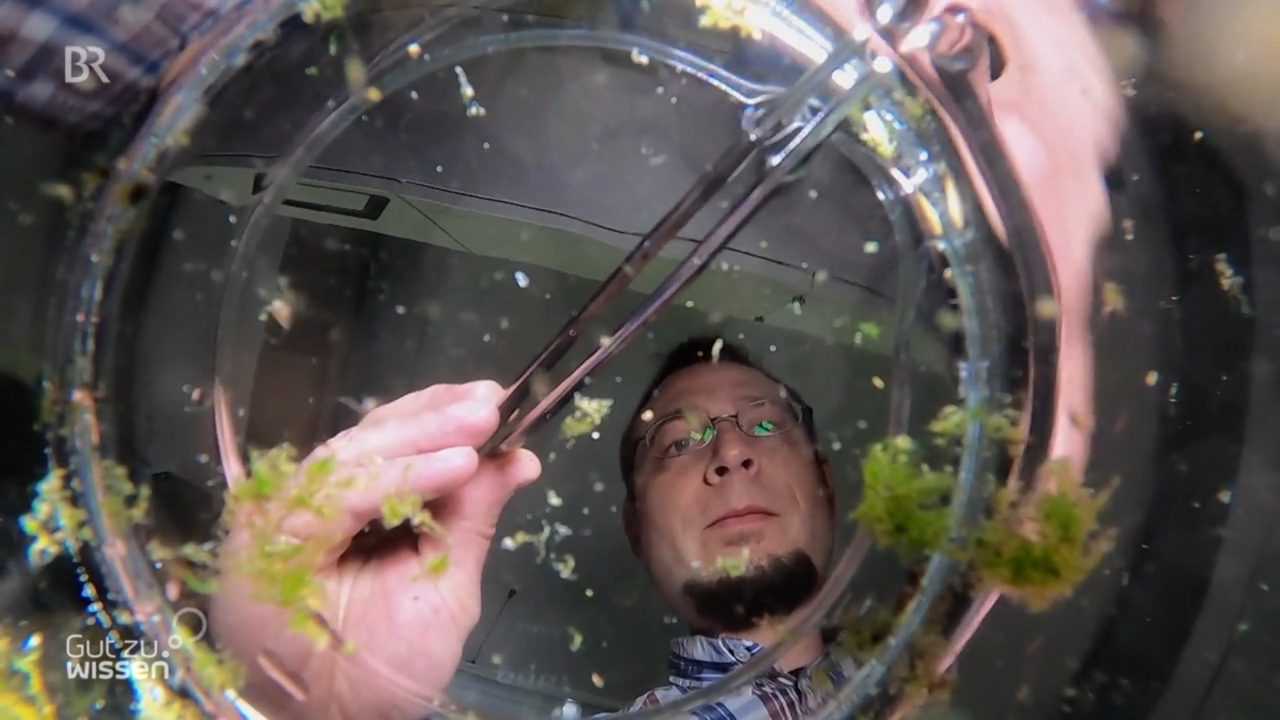
Erschienen am 16.01.2021 - © BR
BR: Gut zu Wissen "Was Mikroplastik in Gewässern bewirkt"
A very worthwhile contribution on the topic of microplastics. The report by Jan Kerckhoff and his team did a great job of dealing with the complex issue of microplastics and also made clear what research is still needed! Martin Löder shows field sampling in the "Roter Main". Christian Laforsch and Julian Brehm discuss how mussels behave when microplastics in the water becomes a stress factor. (Video is in German)
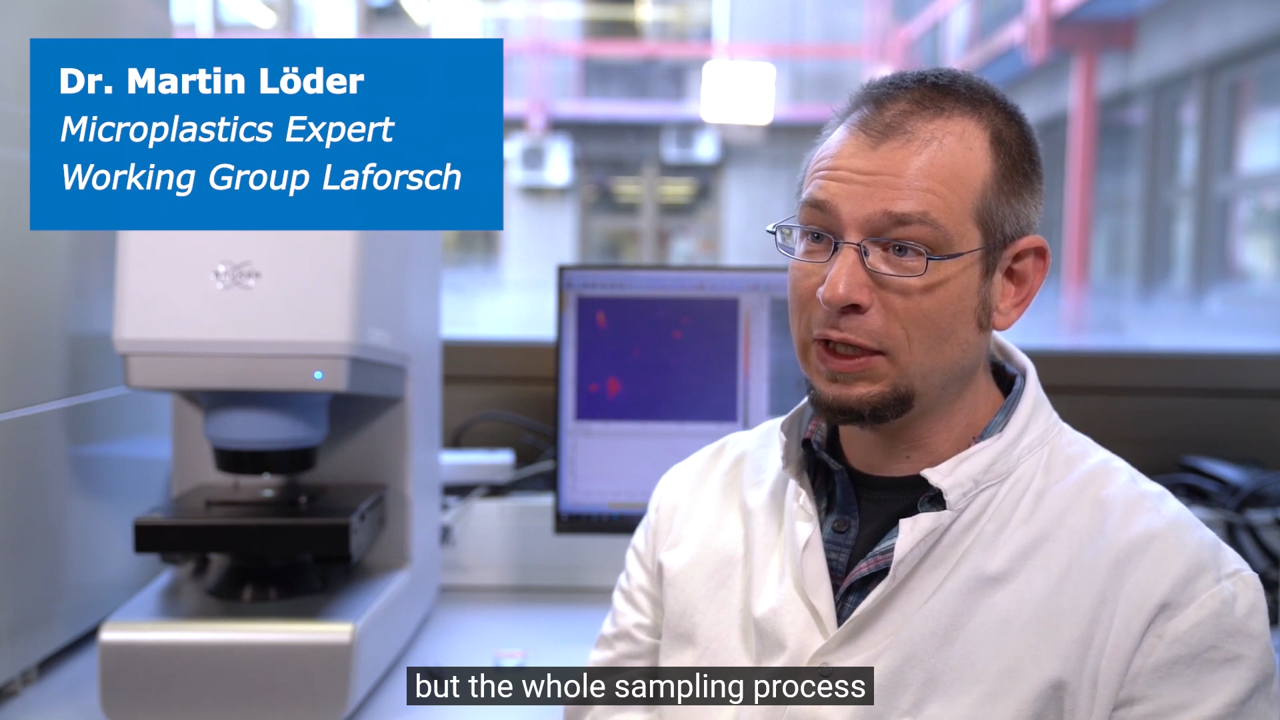
Erschienen am 10.12.2020
Bruker: Meeting Microplastic Experts | FT-IR Microscopy | Microplastics Analysis
The Bruker team Simon Schlindwein and Eric Klein visited us, the Collaborative Research Center Microplastics, at the end of the test phase of the FT-IR LUMOS II. They interviewed our microplastics experts Martin Löder and Julia Möller about the challenges in microplastics analytics.
Click here for the full version of the video.
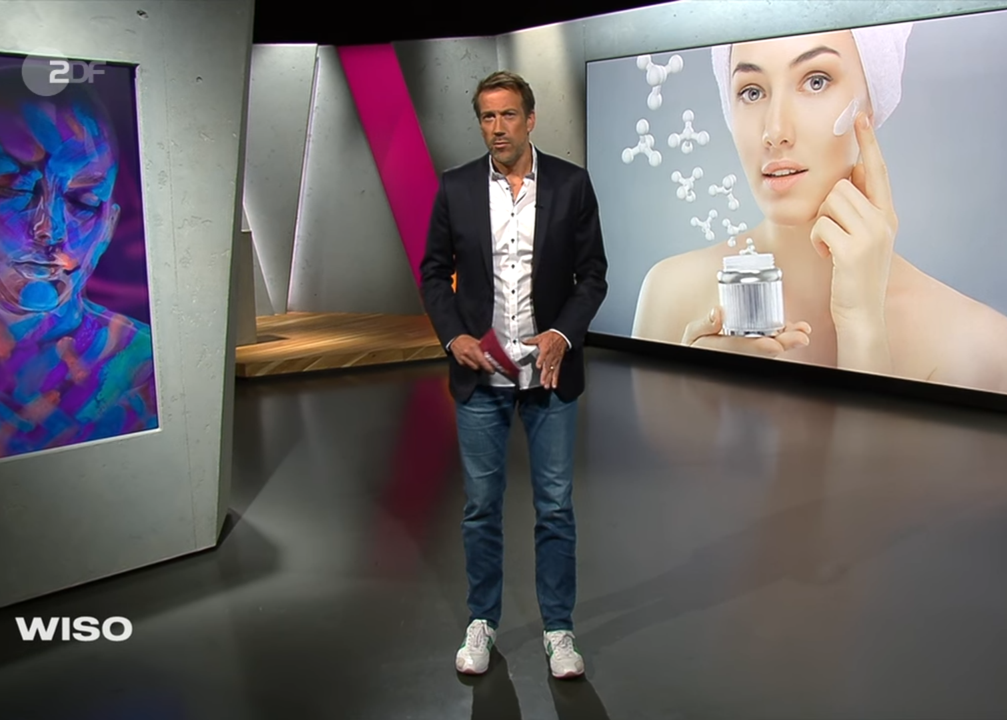
Erschienen am 21.09.2020 - © ZDF
ZDF: WISO "Mikroplastik in Kosmetik"
In Kosmetikprodukten können Mikroplastikpartikel aus z.B. Polyethylene (PE) zum Einsatz kommen. Für die Formulierung von Cremes dienen diese Mikropartikel z.B. zur Viskositätskontrolle um die Verbraucherwünsche hinsichtlich Konsistenz und "Cremegefühl" zurfriedenzustellen. Das diese Partikel in die Umwelt gelangen ist sicher. Welche Folgen dadurch zu erwarten sind ist leider nicht so eindeutig zu beantworten wie in der Sendung dargestellt. Welche Auswirkungen diese auf Organismen, Böden und Gewässer habe - daran forscht der SFB 1357 Mikroplastik.
Erschienen am 31.07.2020 - © BR
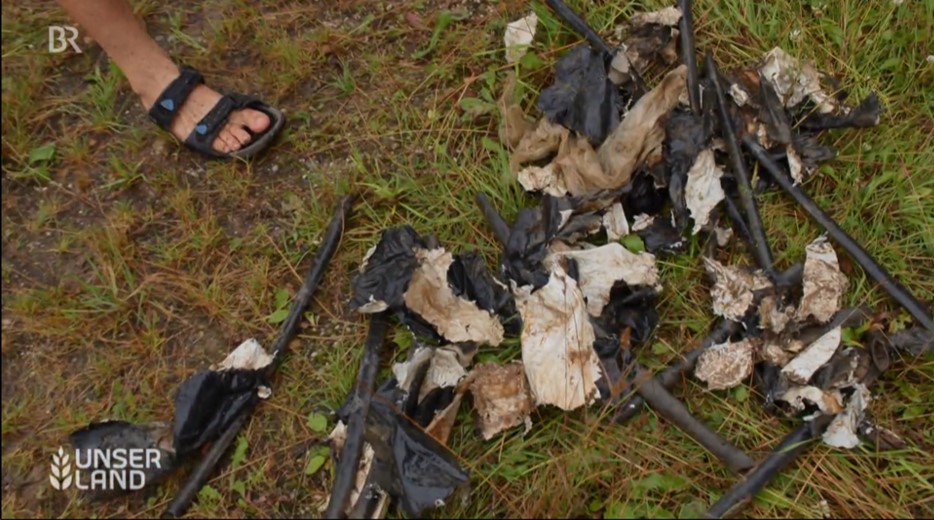
BR: Unser Land "Asparagus films: How dangerous are film residues in the field?"
Plastic debris of agricultural mulch- and cover foils as well as used and broken irrigation pipes in nature cause trouble between Regensburg and Straubing. Anita Bach's contribution in the program "Unser Land" broadcasted by Bayerischer Rundfunk draws attention to very careless handling of plastic waste in the environment. It also forwards the wish of the citizens to introduce legal regulations to protect the environment. (Video is in German)
Click here for the full version of the video.
Erschienen am 08.07.2020 - © WDR
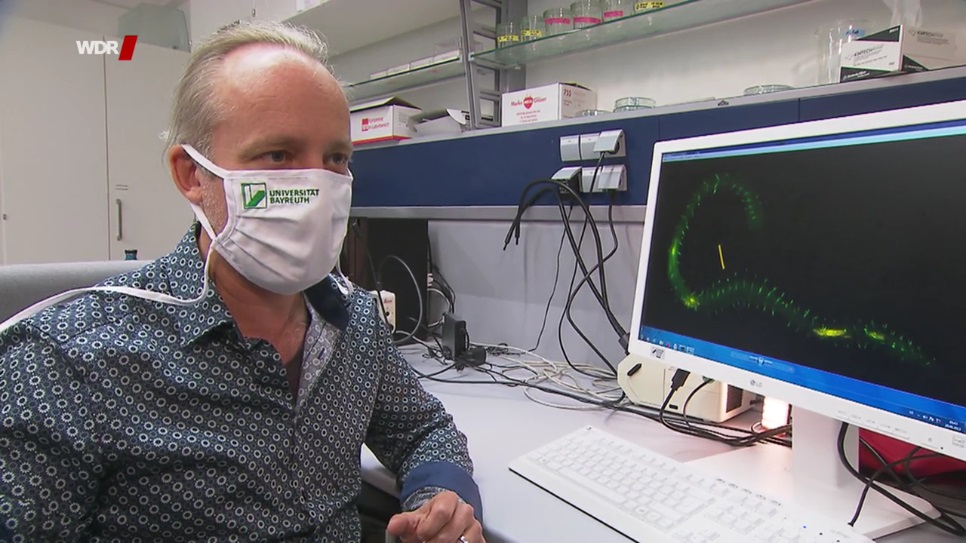
WDR: Markt "Plastics in the field"
Herbert Kordes and the film team of the WDR have brought a soil sample from a field to the University of Bayreuth. Christian Laforsch, Martin Löder and Julia Möller analyzed the soil sample regarding macro- and microplastics. An exciting tv contribution that shows that far more microplastics can be found in soils than previously thought. (Video is in German)
Click here for the full version of the video.

Erschienen am 17.06.2020 - © BR
BR Podcast RADIOWISSEN: Microplastics - A hopeless fight.
Microplastics are tiny and everywhere: wind and water cause the small parts to spread quickly and can reach even the most remote places on earth. The long-term effects have hardly been researched so far. In this podcast Christian Laforsch talks with Claudia Steiner about this topic.
Click here for the Podcast (in German).
Erschienen am 04.06.2020 - © BR
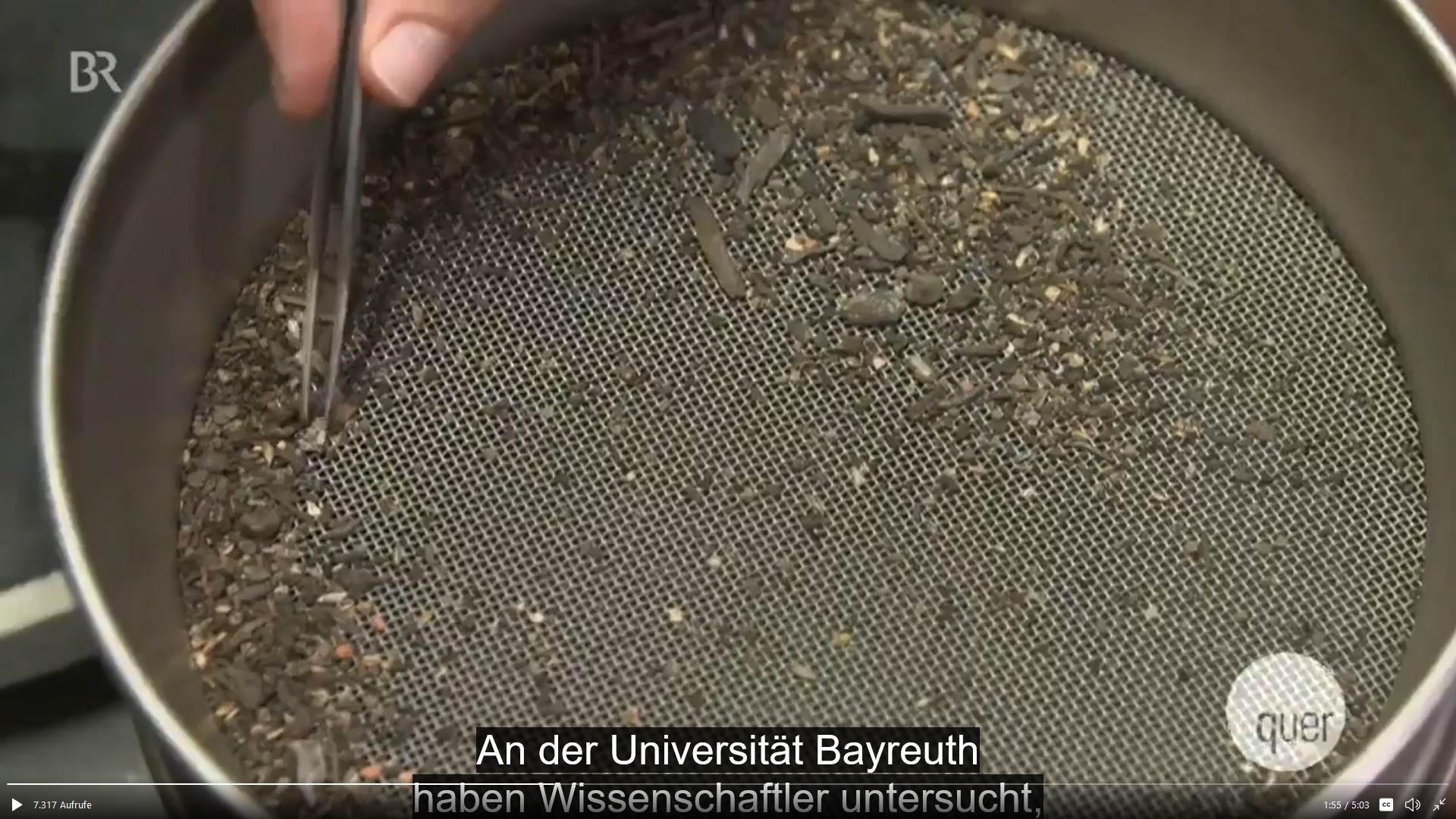
Bayerischer Rundfunk: quer mit Christoph Süß
For the contribution "Sauerei auf dem Feld" (mess in the field) for the program quer with Christoph Süß the film team of the Bayerischer Rundfunk filmed in the animal ecology of the University of Bayreuth how microplastics are isolated and analyzed from soil samples. (Video is in German).
Erschienen am 05.03.2020 - © DFG
DFG bewegt: #fürdasWissen
Christian Laforsch also made a statement on behalf of the DFG and explained what #fürdasWissen means to him.
Click here for the full version of the video.
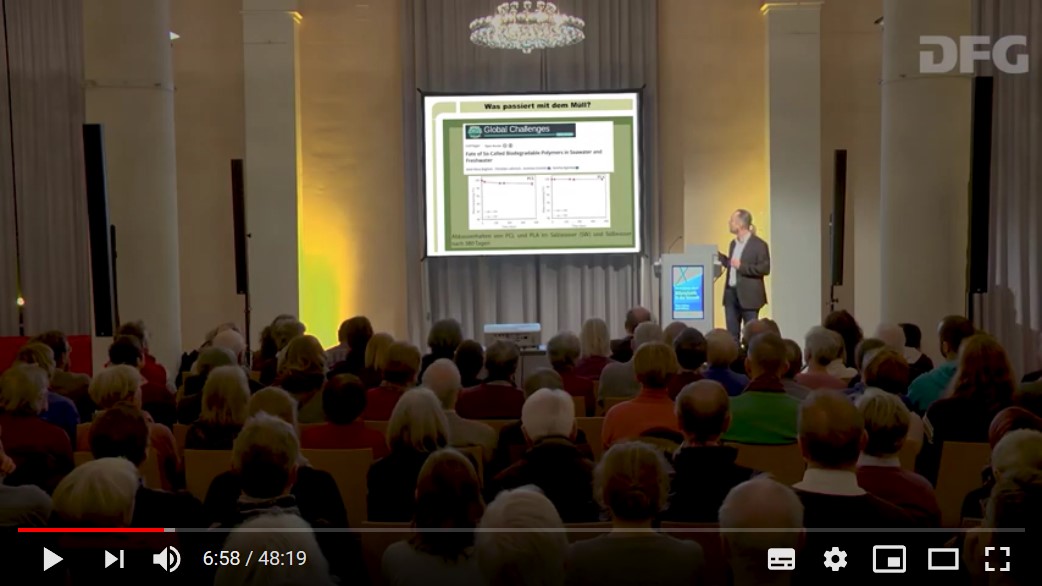
Erschienen am 03.03.2020. - © DFG
DFG-Exkurs: Microplastics in the environment, Munich
On 12 February 2020 Christian Laforsch took part in the DFG event "Exkurs - Insights into the world of science of the German Research Foundation (DFG)". In the state library of his home town Munich, he talked about "microplastics in the environment - small particles, big impact". (English subtitles on YouTube available).
Click here for the full version of the video.
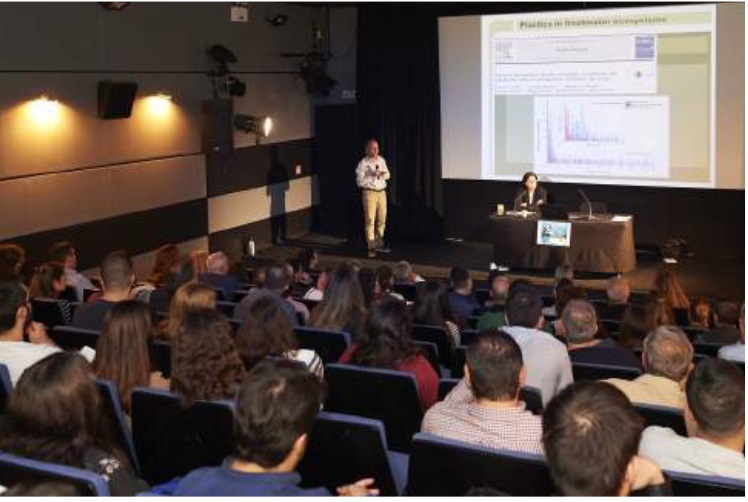
Erschienen am 08.11.2019 - © DAAD
DAAD research marketing event, Athens, Greece
Together with the Hellenic Open University (HOU) in Athens, the DAAD organized a joint event on the subject of microplastics and thus provided an insight into Germany as a research location. Also some great advertising for the research location Bayreuth. Those who couldn’t attend can watch the event on YouTube.
Click here for the full version of the video.
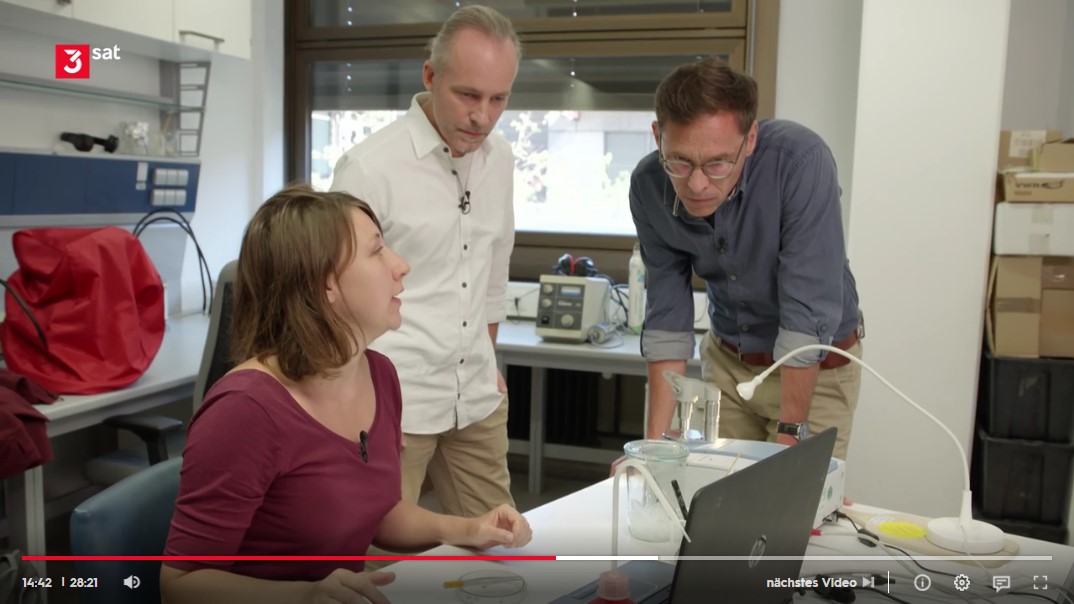
Erschienen am 24.10.2019. - © 3sat
3sat nano spezial: German Environmental Award 2019
Soil research for climate protection and plastic recycling for cleaning agents - this year's German Environmental Award 2019 of the DBU goes to a scientist and an entrepreneur. The award winners are presented in this video. As connecting theme 3sat visited the animal ecology of the University of Bayreuth and filmed how Julia Möller and Christian Laforsch are isolating and analyzing microplastics from soil samples. (Video is in German)
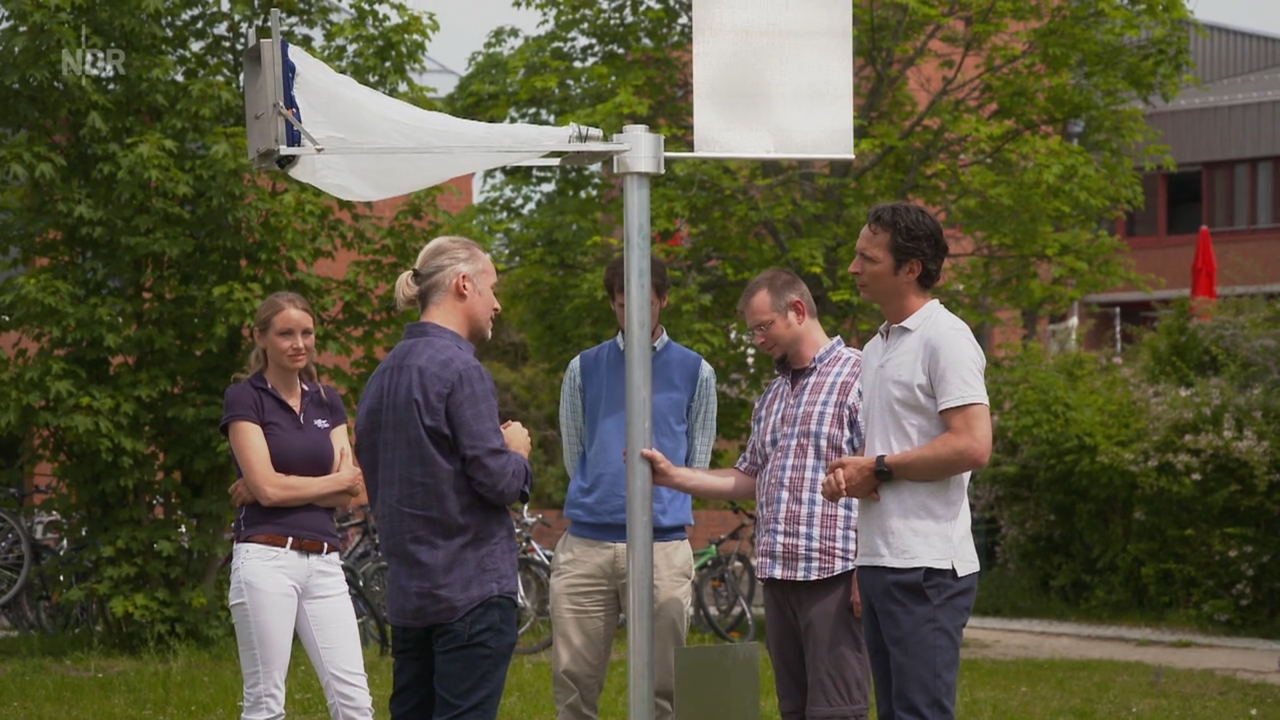
Erschienen am 19.08.2019 - © NDR
NDR: Tricks of the plastic industry
The amount of plastic we are surrounded by becomes particularly clear when we go shopping. The goods in supermarkets are mostly packed in plastic, which is supposed to keep the food fresh and clean. 4.5 million packages were produced in Germany alone in 2018. With far-reaching consequences for people and the environment, as market presenter Jo Hiller and author Sara Rainer show.
Click here for the full version of the video.
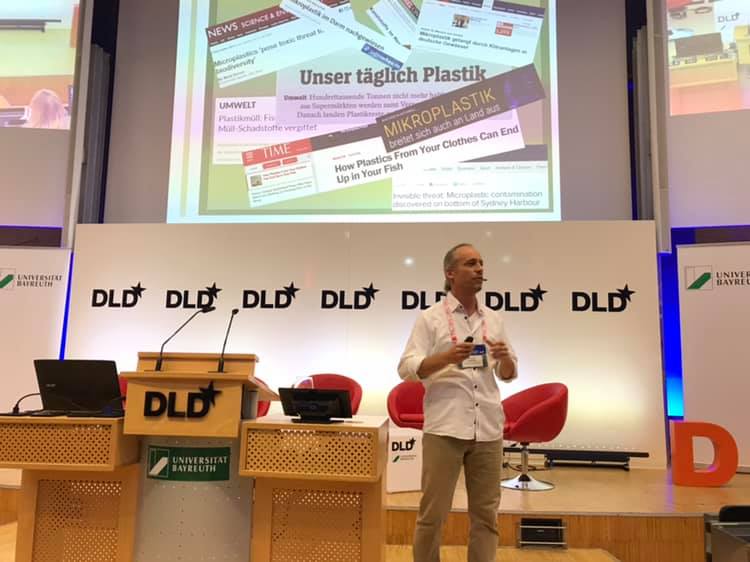
Erschienen am 01.07.2019. - © UBT
DLD Campus 2019: Plastics - from a problem solver to a problem
Apart from climate change, hardly any other topic in recent months has moved us as much as plastic waste in the world's oceans and the detection of microplastics in local waters and our food chain. Christian Laforsch's research is interested in the formation and effects of microplastics. At the DLD Campus 2019, he gives insights into his current work and presents approaches to solve this environmental problem. (English subtitles on YouTube available)
Click here for the full version of the video.
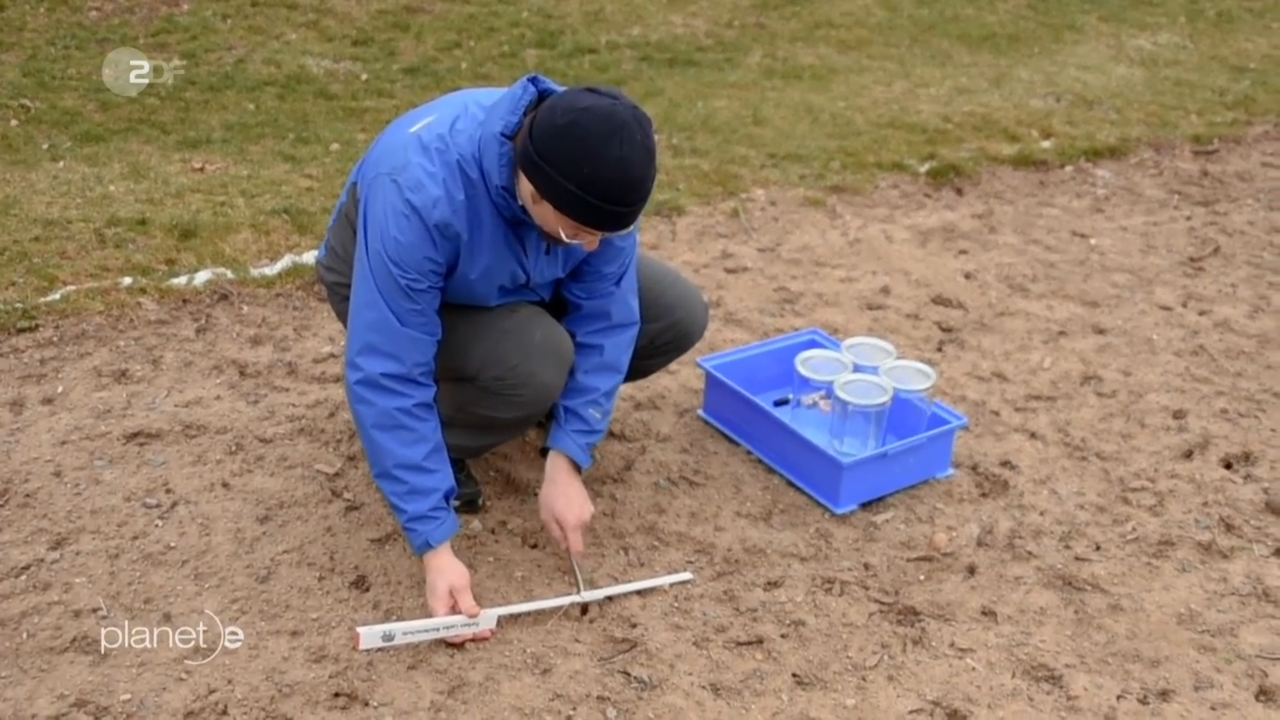
Erschienen 24.03.2019 - © ZDF
ZDF Planet e: Vermüllt und verseucht - Böden in Gefahr
Plastic waste is a worldwide problem and the demand for plastics is increasing more and more. What happens to plastic waste? How dangerous is it for our environment and health? (In German)
Click here for the full version of the video.
Podcast MDR aktuell - know: Plastic renders water fleas defenceless
When plastic enters nature and is eaten by animals, it can have devastating effects. Scientists have now discovered that plastic does not even have to be eaten to cause damage.
MDR AKTUELL Wed 17.04.2019 10:43PM 01:58 min
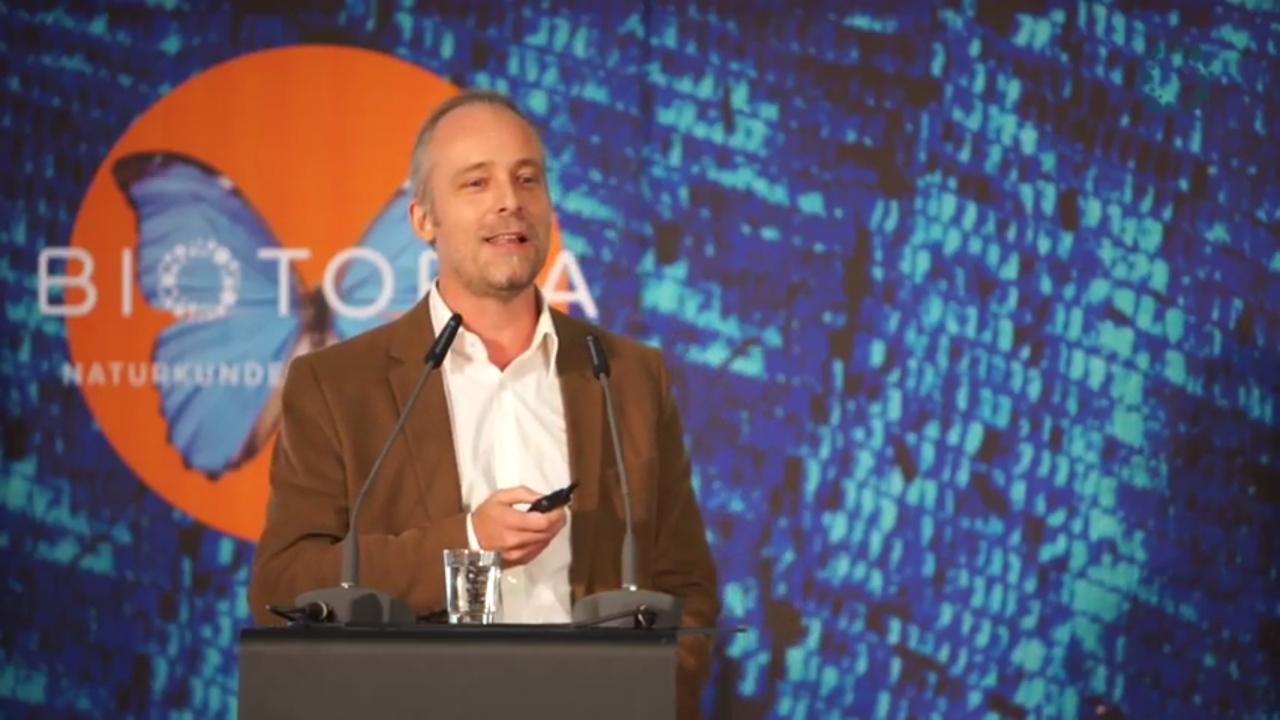
Erschienen am 23.07.2018 - © Biotopia
Biotopia: Plastics - From problem solver to problem
Plastic: blessing or curse? Prof. Dr. Christian Laforsch from the Department of Animal Ecology at the University of Bayreuth speaks at the Biotopia Hautnah-Fest about the burning issue of plastic disposal and what consequences plastic waste can have on our environment. (In German)
Click here for the full version of the video.
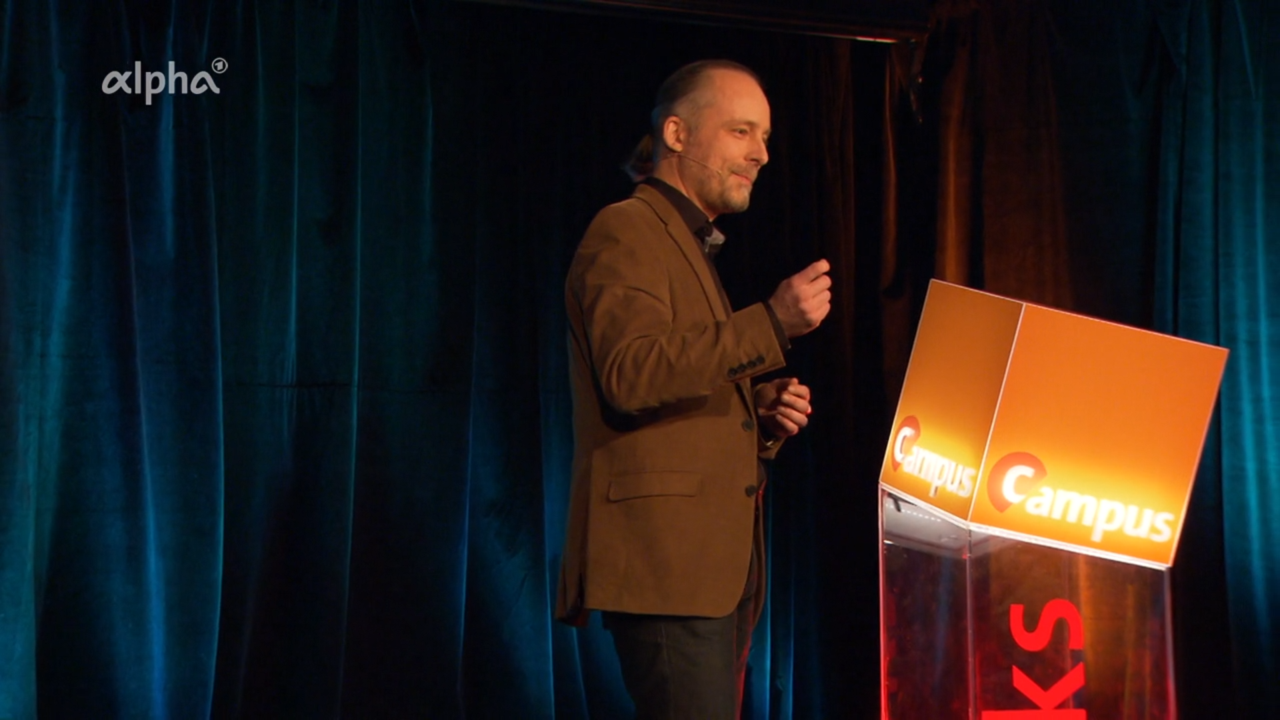
Erschienen am 26.05.2018
ARD Alpha Campus Talks: Does plastic waste make us ill?
Plastic waste is a worldwide problem and the demand for plastics is increasing more and more. What happens to plastic waste? How dangerous is it for our environment and health? (In German)
Click here for the full version of the video.
Podcast Bayern 2 - Zündfunk: Plastic People - you gotta go
It is impossible to imagine modern lifestyle without plastic. Plastic is hip when it comes in the form of a new smartphone bag. Plastic is the future when it comes from the 3D printer. Plastic is pop when it is offered as an I-Tunes voucher for 50 euros at the supermarket checkout. Plastic is so omnipresent that it is hard to imagine living without it.
And yet more and more people are trying to do just that. The first plastic-free shops have opened in Vienna and Kiel. Their product range includes everything for daily needs, and it is completely unpackaged. In Berlin, a project for a packaging-free supermarket chain is starting. The response has been tremendous. The initiators have already raised 95,000 euros via crowdfunding. In the USA, there are already numerous supermarkets with so-called 'bulk shopping' areas where goods are offered without packaging.
What is new about this 'eco-scene' is that it is young and networked. Via social media like Twitter and Facebook, via blogs all over Europe. Behind it are not so much dropouts from the alternative scene, but start-ups with a business plan that not only see the welfare of the customers, but also tell retailers that they could earn a lot from a new, packaging-free trade, because products in bulk and without packaging and excessive marketing are often simply cheaper and allow higher profits.
When Frank Zappa sang "Plastic People, You Gotta Go!" in 1967, he probably didn't mean it, but it could become an anthem for a new plastic-free lifestyle.
Erschienen am 01.02.2017 - © BR
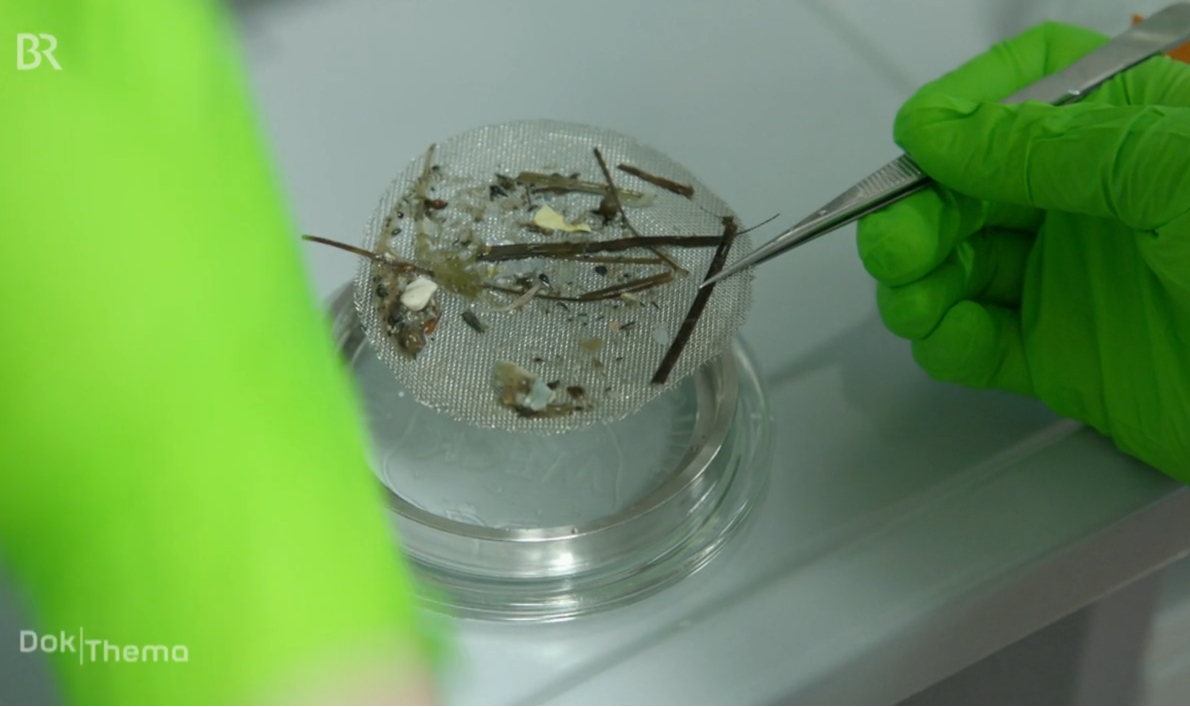
BR: Is the state capitulating to the plastic flood
We Germans are proud to be pioneers in waste separation - and we tend to forget that we are also the European leaders in packaging waste. Why is it so difficult to get plastic waste under control? (In German)